Tag: Kara Joubert

  • Directing, Writing and Acting in a Short Film: My Journey with ‘Time Line’

    Directing, Writing and Acting in a Short Film: My Journey with ‘Time Line’

    “This is the time Line, when can I direct your call?”

    I wrote the script for Time Line under creative boundaries. It was going to have a short running time, a small cast, and only a few locations. The theme was “time” and it was something I wanted to laugh at.

    I never expected to write another script in 2024. I thought one was enough. I intended to take a break and focus on my journalism studies. Until one of the filmmaking lecturers asked me the question:

    “Are you sure? It could be fun.”

    Well, the simplicity was nice while it lasted.

    I jest. The quiet was very boring and I was happy to be persuaded to work on another film again. I wrote the first messy draft in an hour or two and christened it “Time Line”.

    “Time Line” had a deadline and that was December. I was going abroad shortly after that, and most students (and crew) would be leaving for the Christmas holidays after the second weekend into December. That was three months away: a little less than my first short film’s deadline.

    But I had something that past me did not have before:

    The headache-inducing, tear-jerking, stress-soaked experience of making a short film for the first time.

    I was seasoned (lightly salted, more like). But I had some experience under my belt thanks to my previous film, and I intended to use it wisely.

    Step one: find money and a crew

    Regarding money, I had none. This contrasted with my previous film, which was luckily grant-funded.

    Crew were much easier to come by. I could reach out to people I met through Petalled Apologies. The legendary cinematographer Oliver Townsend was involved, but we still didn’t have a full crew.
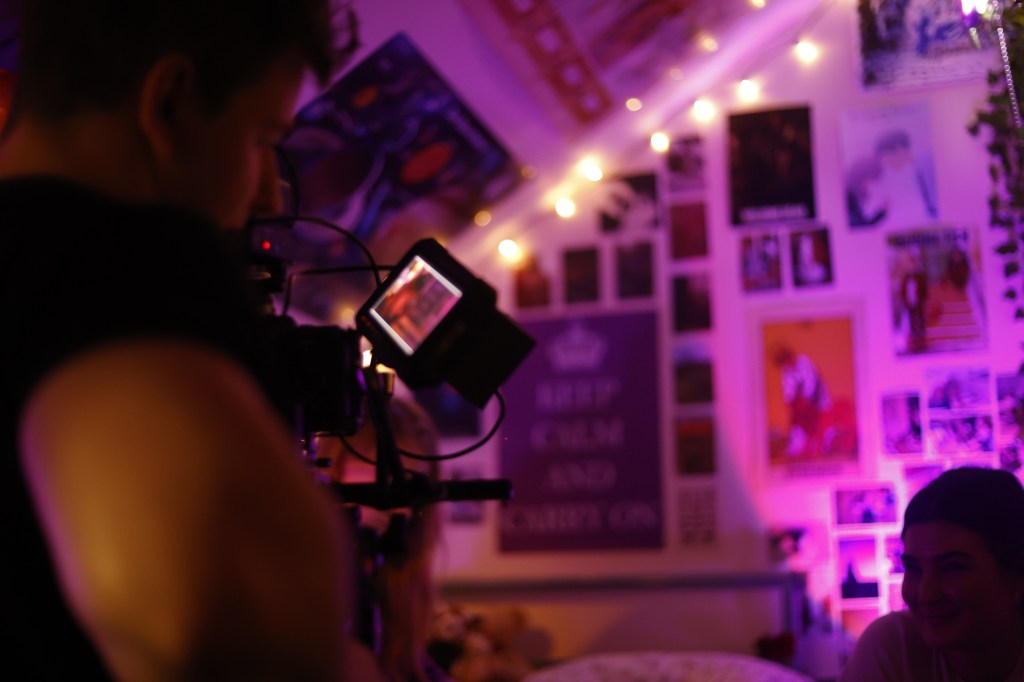
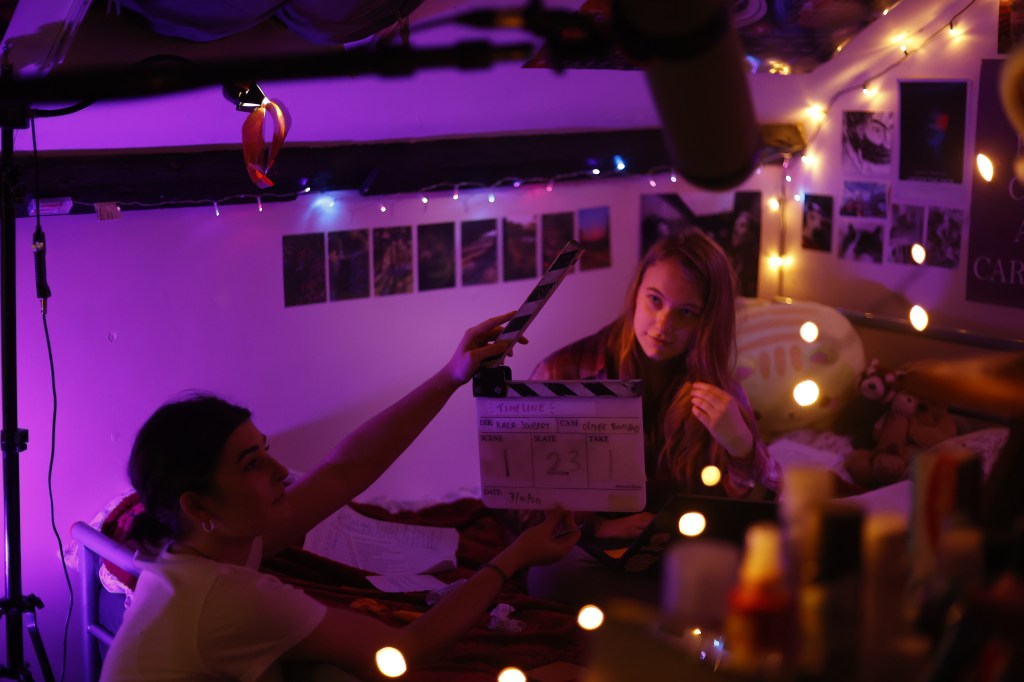
    Step one was not fully achievable on my own, so I needed to enact step two.

    Step two: find someone who can find money and a crew

    The role of a producer is not something to take lightly. In a nutshell, they produce a film. But that means a lot more than one word. They produce money, crew, cast, locations, schedules, and signatures for paperwork. That’s a lot to produce if you are just one person.

    So I would recommend getting more than one producer.

    In the end, there were probably three of us.

    But every one of us had our roles and responsibilities, and I can not thank the other producers enough. M Carter organised the paperwork side of things and enlisted some of the crew. Meanwhile, Maddie Oastler helped to organise the bake sale and helped M. She also stepped in as the assistant director on the day of shooting.

    Together, we raised around £200.

    Step three: locations and cast

    We needed two locations and two actors.

    Sounds straightforward, right?

    I thought so too.

    For the office, I adventured into the city to try to find places willing to have us film there. We found gold with one location, but they could not let us film on a weekend.

    Eventually, I asked the university if we could film on the premises. They said yes, but we still needed a student’s room for “Kate’s” scenes.

    I took to social media and asked for anyone willing to allow us to film in their accommodation. A student got back to me and gave us permission to film in her room.

    M Carter organised the schedule, which meant we had a time and place to film.

    Admittedly, we waited a little late before finding a cast. That wasn’t anyone’s fault. We used the platform mandy.com to find applicants but ran into an issue with the account and so had no cast a week before shooting.

    I managed to persuade a friend and colleague to take on the role as Time Line Operator.
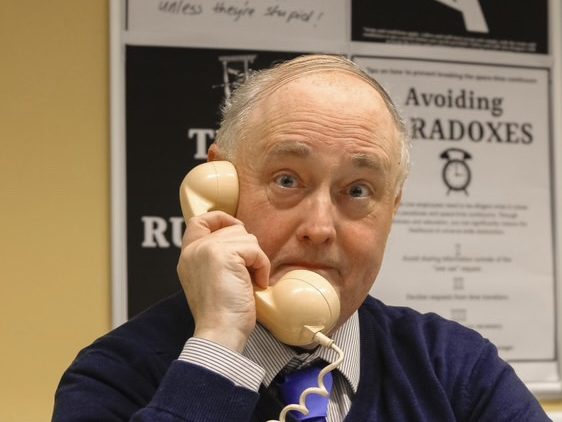
    Alex Lewczuk harnessing his inner “Time Line Operator”

    …and I was about to make my debut as an actress.

    Step four: go with your gut

    Confession time: unless you class primary school plays such as A Midsummer Night’s Dream and my Munchkin performance from the Wizard of Oz as “acting”, I had never acted before.

    For a while after considering myself as “Kate”, I sat in a state of disbelief. I alternated between knowing I was capable of portraying her and doubting that fact.

    There were a few last-minute alternatives, but nothing gave me peace. It was partly the last-minuteness of it, and partly the fact that I knew I could do it. I had to listen to my gut.

    As an autistic woman, I have learned to mask efficiently. Nobody can really generalise something like autism, but I think a lot of autistic people in social environments and workplaces have to adapt to become acutely aware of their face, body language and tone.

    In essence, I had not acted before. However, I know what it means to measure body language. This would feel a bit like that, but taken to an extreme.

    Step five: doubt your gut (optional)

    I think most people taking on large projects at some point ask themselves: “What on Earth am I doing?”

    Several answers can flood in all at once:

    “Doing something great.”

    “Doing something crazy.”

    “Making a fool of yourself.”

    There was a brief time when I was surrounded by people who would show no hesitation in telling me that. “Stupid, irrational, silly and weird” are childish words, but they can linger in one’s mind if you let them.

    Thankfully, I have good people surrounding me who are really encouraging. This is an important element of taking on a big project: a great support system.

    You can only go so far as one person.

    Step six: fear and embarrassment are hurdles you have to jump.

    I have never been drunk a day in my life.

    I have only observed drunkenness from a distance thinking: “Thank goodness I never need to know what that feels like!”
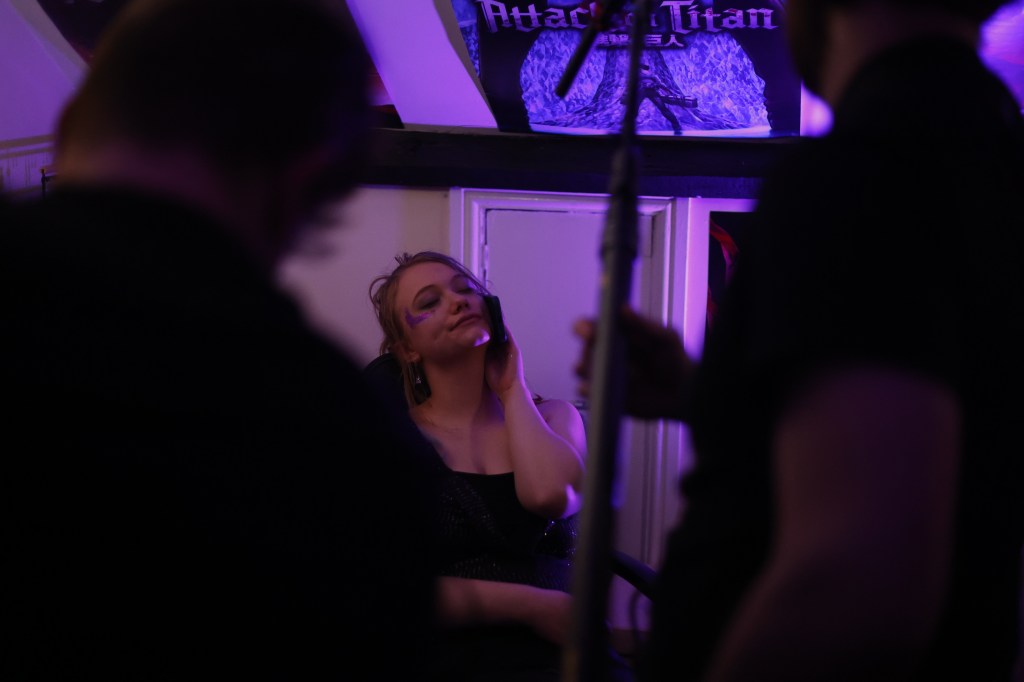
    But Kate, my character, does. She gets really tipsy after a night out. I wrote it as such and now I had to act it.

    If I let myself think about all the ways I could embarrass myself, I would never have done it. If I let myself feel any fear, then it would have shown. I was the director as well as lead actress. Being a leader, any fear from my end might have impacted the crew as well.

    So, I had to jump it. Give up my right to feel afraid. Let myself feel only a little, so I can ride the wave of anxiety as opposed to being drowned by it. After all, fear mixed with excitement is a great alternative to caffeine.

    With embarrassment, I have found that it is something to be embraced. It’s bound to be a part of life. If I avoided embarrassment while acting, I figured I would only embarrass myself more.

    So I dove straight into it. Slurred speech, messy hair, fake vomit and all.

    True, I made some mistakes at first. As the writer of the script, I had no excuse to forget my lines!

    However, I managed to strike a balance between my pre-prepared director’s notes, experimenting on the spot and self-critiquing. In the end, it actually ended up being quite fun!
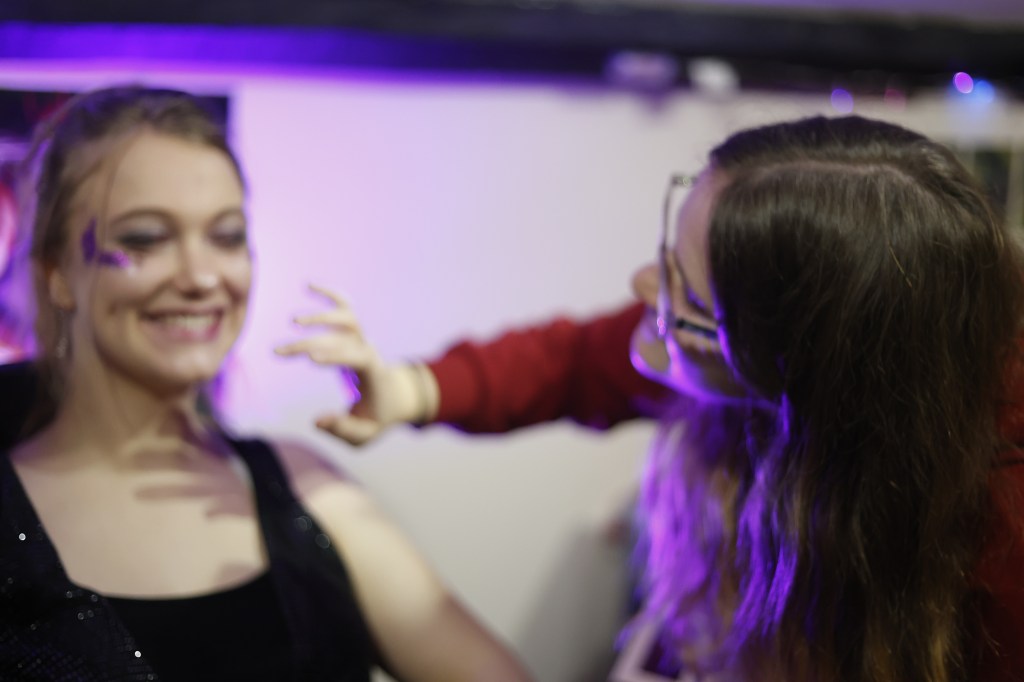
    In fact, I would happily act again.

    Step seven: celebrate the victories

    This step is an important one. Anyone taking on a big project is likely a busy person overall, so taking the time to breathe is just as important as finding the time to be productive.

    After filming Time Line, everyone had a Christmas off before reconvening back for the post-production stage. That included myself, which was perfect, as it gave me the time to get prepared to study abroad.

    Now I am writing from Brisbane, Australia. Being involved in post-production from halfway around the planet is a funny thing. Thankfully, I managed to sit with the editor, Finlay Dodd, before leaving. However, there is still plenty to do before Time Line can make its film festival debut.

    Stay tuned to find out how it goes.

  • Review: Super/Man: The Christopher Reeve Story ★★★★☆

    Review: Super/Man: The Christopher Reeve Story ★★★★☆

    I did not manage to see this film when it was released in the cinema. However, with a 11 hour flight to LA, I suddenly had a lot of time and opportunity on my hands.

    The tragedy and triumph of Christopher Reeve is well-established for anyone who lived during his time and has access to Google.

    I am a sceptical type when it comes to media forcing emotions upon me, and milking a situation for the sake of milking a tear. I’d much rather the story be told naturally, and for the emotions to naturally swell.

    However, the depth and details of this have been beautifully portrayed by the documentary makers who interviewed those closest to him.

    Other great techniques used by the documentary makers included the use of music and footage from Christopher Reeve’s films.

    Within the first three minutes, you know exactly what you’re going to watch.

    Mr. Reeve is depicted in an overall positive manner, but his flaws were explored as well. I found this was important, as with any story about humanity.

    As well as humanity, it is also a story about tragedy, loss and taking the resilience of a bad situation and turning it into a “superpower” as to generate change.

    The only reason I didn’t give this a five star was the pacing and timeline. The documentary was non-linear, built together with connecting threads if thematic elements, which moved from Reeve’s acting work, to his family, to his injury, and revisited each one in no obvious order.

    This is more a case of preference, but I would have liked the timeline to be directed by sequential order. Still, it works for the documentary in the sense that it doesn’t take away from it.

    The pace was good on a whole, although I would have liked there to be more time replacing some of the run time with an exploration into the legacy that Reeves left behind.

    The tragedy behind Christopher Reeve is a prevalent theme, but this is a natural by-product of the story, rather than its main emotional composition.

    I was very impressed, and felt there was a genuine element of tenderness involved. One that did not need to be milked beyond what seemed natural

    The story speaks for itself, and the documentary makers involved knew that I would likely cry without them trying.

  • Kara X Australia: Flying

    Kara X Australia: Flying

    Prepare for the worst, pray for the best.

    These are words to live by when it comes to travelling by flight.

    It’s a good thing, too. Because preparation paid off. I went to Heathrow a day before my flight, just in case there were issues with the train lines. And there were. BIG ONES.

    The entire Elizabeth line was knocked out, which would have meant severe delays for anyone travelling to the airport.

    Not for me (cue evil laughter).

    It is important to avoid stress as much as possible when it comes to these sorts of things. Especially if a 47 hour travelling period is involved.

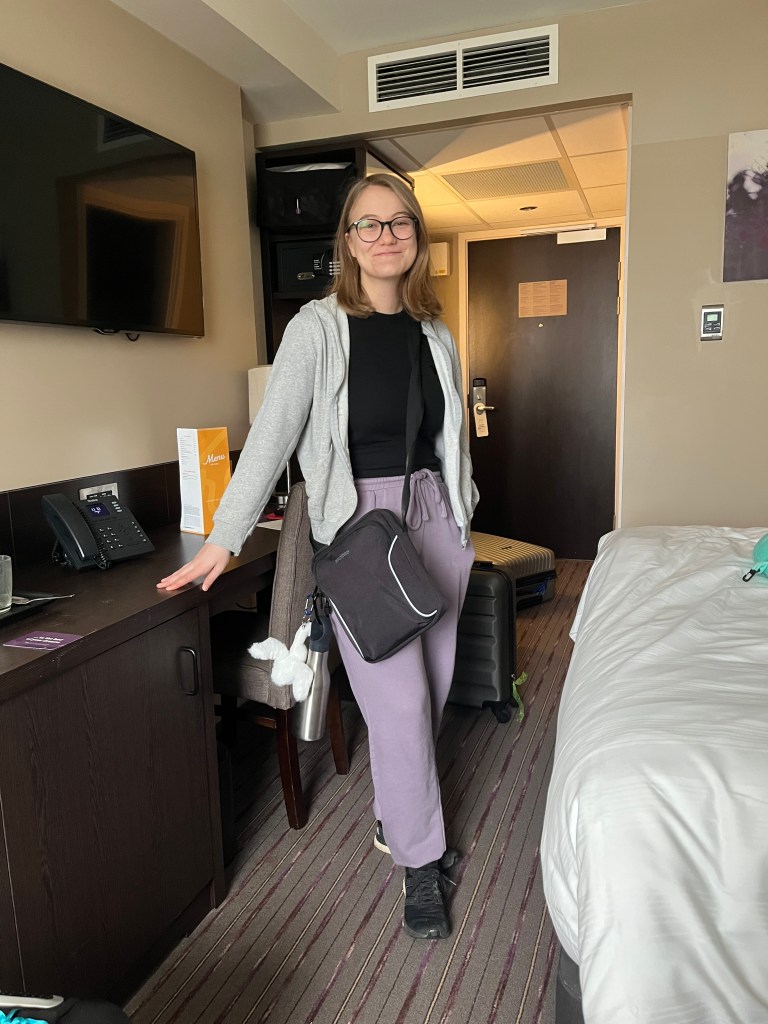
    That means comfortable clothes, investing in a foot rest for the plane, and ensuring you download your Spotify playlists.

    Trainers and joggers: a comfortable flying outfit (featuring the Premier Inn room)

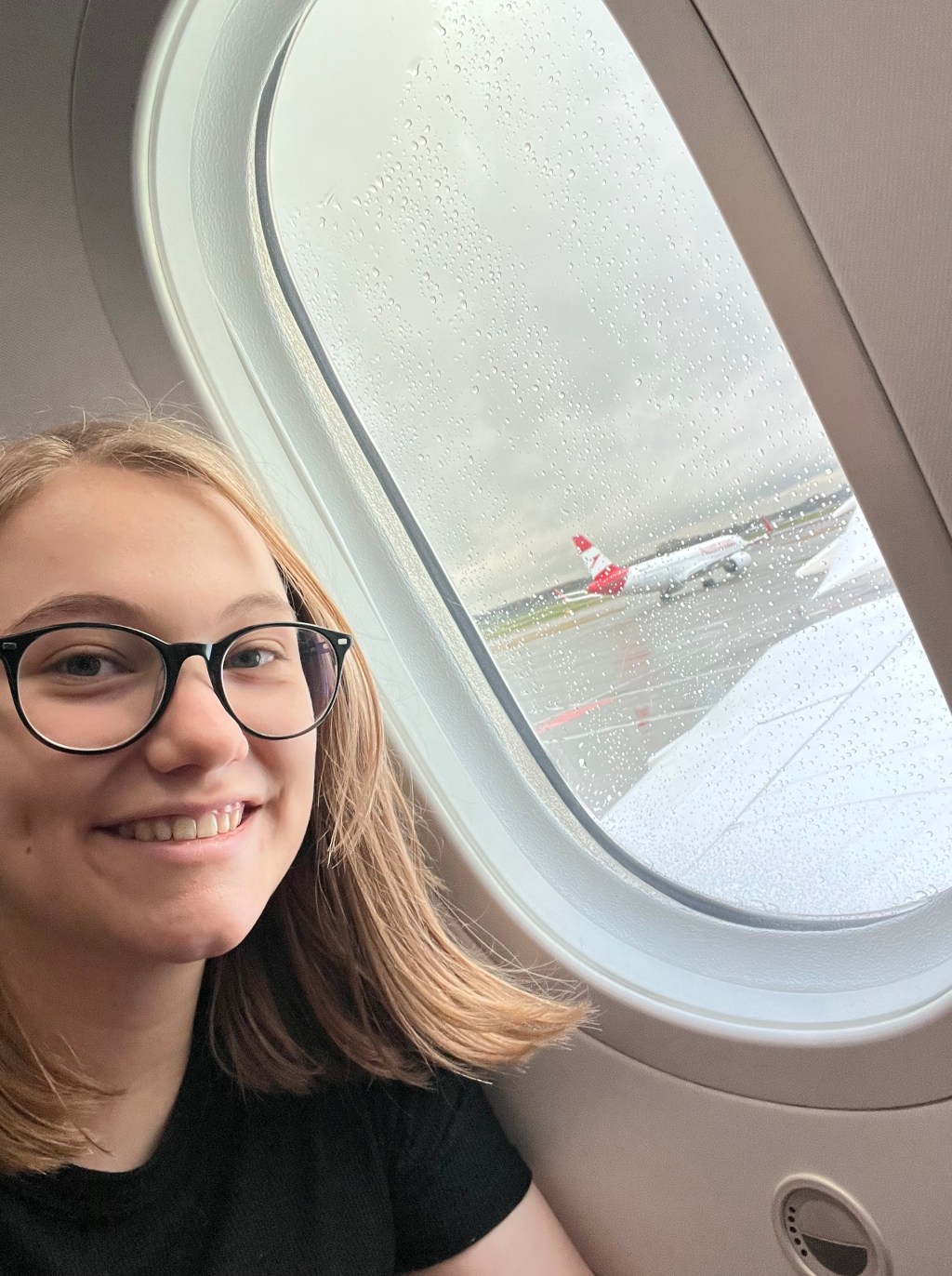
    Australia is ridiculously far away. You don’t realise just how big the planet is until 24 hours of sleepless travel has left you with left for right, right for left, legs that are jetlagged and a brain that is cramping.

    Some mild confusion is a certain side effect of long haul flights. I react to extreme tiredness like someone who is essentially tipsy.

    In all honesty, I did sign up for this.

    Plus, it wasn’t all bad. There were some great moments.

    I met some amazing people, including an Uber driver who was proud of his kids, essentially acting like the dad from Bluey. There was also a Heathrow staff member who upgraded me to economy plus for free.

    Of course, the nice moments, like sugar, is only sweet when compared to sour things like these:

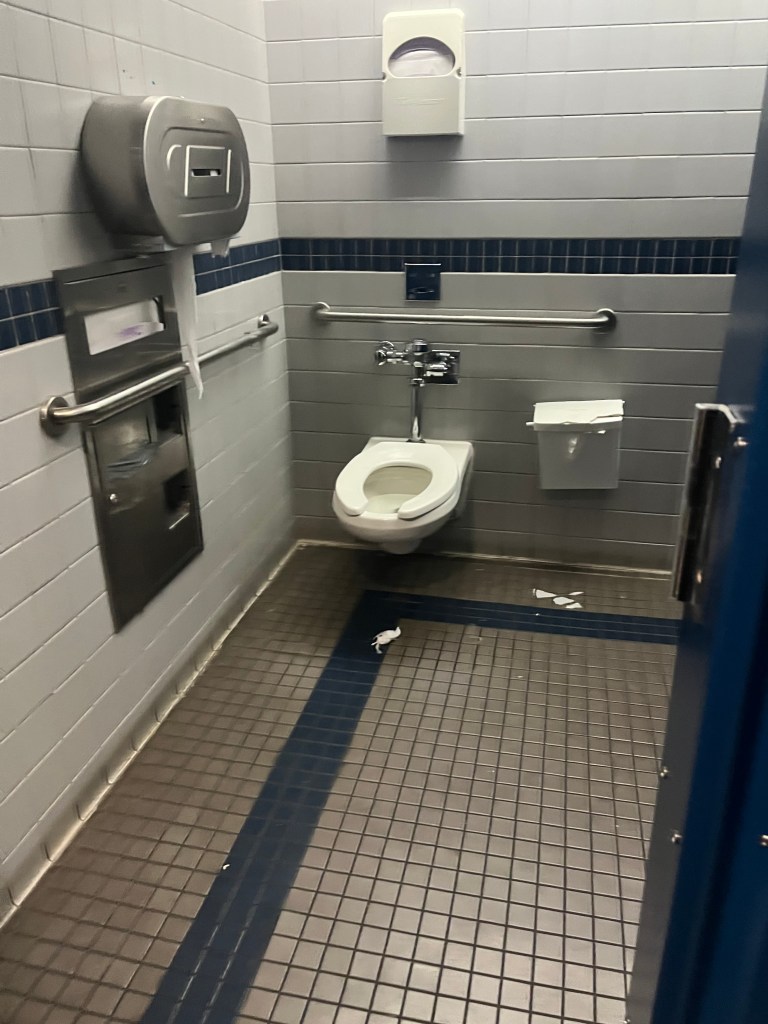
    The airport facilities in LAX were… less than welcoming.

    I will only be persuaded to go back into LA if a film set is involved.

  • Kara X Australia: Preparing

    Kara X Australia: Preparing

    Hello there! Join me, a British journalism student, as I venture into Australia to study at Melbourne’s La Trobe University as an exchange student.

    In this post, I will discuss everything I did to prepare for studying abroad. That includes the application process, the cover letter stage, interview and visa.

    Buckle up. Things are about to get a little “admin heavy”.

    Applying

    The year I applied to study abroad in the University of Lincoln, around 16,000 students were given this opportunity.

    Some partner universities would only be available for students studying media. Others were open to all 16,000 students who might want to apply.

    That included Melbourne’s La Trobe.

    My lecturers said that everybody wanted to study here. So, who was I to apply? I was only few months into my degree, still a newbie.

    It might sound underwhelming. But the answer to the above was simple:

    “Why not?”

    Studying abroad was a scary concept, but I was always up for a challenge. Especially if it meant I would be opening up my employability prospects.

    So, I registered my interest and applied. But first, I needed to write a cover letter. Ideally, using more than “why not?” as an argument.

    My Cover Letter

    A cover letter is not always the most exciting thing to write. Even if you are excited to apply for the job or opportunity that requires it.

    But genuine enthusiasm is definitely a necessity.

    Thankfully, I had grown more eager to go as the prospect became more real.

    In my cover letter, I included:

    • A general understanding of the culture and course to show I had done research.
    • An eagerness to go.
    • A promise to represent both universities well.
    • A specific understanding of why the international course is beneficial to my academic and personal interests.
    • Examples of me being a good student.
    • Some light reassurance that I could afford this.

    It must have worked, because sometime after, I was then called for an interview with my lecturers.

    But that did not go how I expected. At all.

    Stand Your Ground

    It felt quite intimidating at the time, but looking back I can understand why they needed to make sure I was sure of my decision.

    Before walking into that interview, I was mostly certain. But during a near-debate with my lecturers, I HAD to be certain. They gave me every reason to doubt I would ever be accepted, and tried to persuade me to consider joining other universities.

    But I stood my ground. By the time I left my interview I was very certain that La Trobe is where I wanted to go.

    Acceptance

    The acceptance stage is a funny one. Just because you are accepted does not mean you are enrolled. And just because you are enrolled does not mean you are going.

    Acceptance is the first step of enrolment, and enrolment is the first step of getting a visa.

    But I still punched the air when I saw that I was accepted. Now going to another country to study was a bit more possible.

    The To-Do List Stage

    If anyone wants to study abroad, I would offer them this tip above all else: BUY A NOTEBOOK. One dedicated just to studying abroad, because after I was invited to the pre-departure conference, my to-do-list was never the same…

    The conference was an informative session teaching us about the visa application process, when to purchase your ticket, how to fill in the risk assessment and so forth.

    It was also an opportunity to ask questions like, how to get a new sim card for your phone once you arrive and the importance of telling your bank you’re going abroad.

    This is where things started to get very informative.

    And a little overwhelming. Studying abroad had moved from being an abstract into a visible destination in the distance.

    GRANTS, GRANTS, GRANTS

    This headline can also be “DEADLINES, DEADLINES, DEADLINES.” These are so important, especially if you don’t have a massive amount in your bank account. I set alarms on my phone and filled in my notebook to remind me of the deadlines to apply for things.

    There was a deadline for grants, a deadline to arrange a visa, and a deadline to select my subjects.

    Enrolling Is A Pain

    Remember when I said “just because you are accepted does not mean you are enrolled. And just because you are enrolled does not mean you are going?”

    That’s where this statement comes in.

    I was accepted by La Trobe. But I was not enrolled. That took much longer.

    In Australia, if you want a student subclass 500 visa, you need a certificate of enrollment (CoE).

    So, for a few months there was essentially nothing I could do but fill in paperwork and wait for a CoE.

    As soon as that came through, I could start the visa process.

    Am I A War Criminal?

    Filling the visa itself was not too grueling. I finished it after 2-3 hours.

    However, all global visas have different processes and ask different questions. One of the ones I was given was “Am I a war criminal?”

    To avoid any confusion, I should make it clear. The answer to that is no.

    It took two months exactly before the visa was approved.

    Packing

    This is where you find me now. I am writing this in part due to procrastination. I will be flying in a week, and have barely started cramming my suitcase. Wish me luck on the next phase.

    If you have any questions about the study abroad process, please feel free to ask!

  • Small Things Like These: understated acting saves vacant plot ★★★☆☆

    Small Things Like These: understated acting saves vacant plot ★★★☆☆

    Is Small Things Like These just another artsy-fartsy Cillian Murphy film? Well, mostly.

    The film focuses on Bill Furlong, a coal merchant who discovers dark secrets in the local convent. Pregnant women and girls are treated poorly by nuns in a sadistic environment of cruelty and carelessness. A quiet but sensitive soul, discovers this by accident. The film follows his actions thereafter.

    There is an overall oppressive atmosphere within the film, following themes of disconnected families, abuse and bullying.

    But fear not, for there is a happy ending. At 93 minutes long, there is a lot of unraveling that needs to take place before this ending is given.

    With an old film feel to it and its incredible performances, it is no surprise that this drama been given critical praise in film festivals.

    Regarding the visuals, the gritty soul of the film is shown through a soft lens. There is a genuine ache I feel when peeling back the layers of the actors performances, from the double takes of Bill’s wife and Bill’s gasps for relief, the acting is superior to most films being shown in the cinema today.

    Warm colours collide with cold moments, just as Bill Furlong’s (Cillian Murphy) sensitivity collides with the harsh world around him. His character is tragically human, fearing the cruelty of the world yet fearing the consequences of changing it.

    However, I am wary of falling into the artsy trap of calling this a masterpiece. Film critics sometimes fail to understand that unless you are a surveyor of the arts, you are not immediately interested in the deeper meaning or colour palette of a film.

    Thus, I will critique the film based on the face value. This is what matters to most movie-goers, after all.

    The storyline is made evident soon enough, although audiences who do not enjoy slow burns will certainly struggle to stay interested

    It does inspire thought, albeit through seemingly disjointed flashbacks and interactions throughout. Unfortunately, the disjointed nature of these occasionally boarders on incoherent.

    Thematically speaking, I feel Small Things Like These could have done better if condensed into a short film. However, the long-form storytelling is done with beautiful cinematography and incredible acting. It kept me interested, although I do wish more happened.

    The storyline was minimalist, which comes with its own disadvantages. The advantages are that audiences can focus more on the acting, visuals and subtle reveals of a character’s inner turmoil. But if you’re watching a film for the sake of watching a film, this might bore some.

    The ending is appreciated, and for a whole two minutes, I felt uplifted.

    Much like the coal Bill supplies, this is a slow burn that fails to warm the heart. Still, Small Things Like These is visually beautiful and a masterclass in understated acting.

  • Paddington in Peru: it was barely bearable ★★☆☆☆

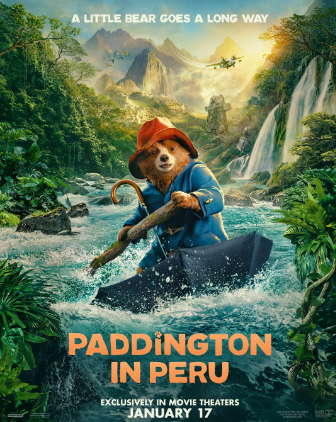
    Paddington in Peru: it was barely bearable ★★☆☆☆

    This is the third instalment in the Paddington series, and often with third instalments (such as Venom), it’s more of the same with less of the punch. 

    I can imagine the filmmakers had many challenges to face. Since the success of the first two films, Paddington has gained a following, and I am among them. I went into the cinema with cautiously high hopes, and unfortunately these were not filled. 

    The reasons included the lack of a feel-good side quest. In the previous films, a refreshing variety of subplots were present, generally stemming from the overall goal by the characters. I would argue there wasn’t any of that in this film, as the missing aunt and the pursuit of El Dorado were indistinguishable plots. Additional shenanigans were far and few between. 

    I also found that things happened because they were supposed to. There was no organic cause and effect but rather a cause, then effect. If I were to describe the plot, I would be using the phrase “and then” often. When a film does this, it risks losing its sense of a natural narrative, which I felt happened in this film. 

    I would also use the phrase “and apparently” a lot too. Apparently the young Paddington had an ancient bracelet on him when Aunt Lucy saved him. And apparently that bracelet was one she wore all the time. And apparently that bracelet has a greater purpose… despite us never having seen it in the previous films. 

    So it goes, with most films part of a saga, there are additional plot points added and backdated. Marvel does it almost every time it makes up a new enemy (I’m looking at you, Venom). But it irks me. It’s not world building, it’s world reframing. And it virtually always feels forced. 

    Maybe I’m being pessimistic. Maybe Paddington’s overwhelmingly positive attitude and the nun’s surprise musical number failed to inspire excessive jubilation with me after a long week of work. Maybe I was just tired. But from my perspective, the humor was less “haha” and more “heh”. 

    With the previous films, Paddington’s clumsiness often paved the way for particularly funny moments. But if you’ve seen the trailer for the film, you have most likely seen all of those scenes before walking into the cinema. 

    One of the many things that the previous films did successfully was incorporate themes of homesickness and family in a surprisingly emotive way. This film took on a different theme by focussing on the concept of leaving the nest, and the idea that someone from another country has “mixed feelings” about their homeland when their current home is elsewhere. 

    This was a great idea, and I thought the film would go into it in more detail. I was wrong. Rather, it was the bow that tied the beginning and end together with Paddington’s letters to home. 

    Creatively speaking, this film felt more formulaic than previous ones. There were nice moments but missed opportunities to show more of the unique animation and special effects that were in the first films. 

    As for the “surprise” plot twists, they were not. It is hardly a spoiler to say you can’t have the talented Olivia Coleman as a mere secondary character. 

    Despite the crying toddler watching the film to my side (and boy, did she cry), Paddington in Peru isn’t very emotional. The moments of conflict were more moments of inconvenience. Still, it isn’t a bad film. Merely an average one. Box office money aside, there were good intentions behind it. Paddington is loveable, iconic and very very polite. 

    Overall, the film is an easy watch for the family. But do not make the same mistake I did. Lower your expectations, and possibly get some sleep before going to the cinema. 

  • Review: The Wild Robot ★★★★ 1/2

    Review: The Wild Robot ★★★★ 1/2

    The Wild Robot is a Family Adventure Animation produced by Dreamworks Animation and distributed by Universal Pictures.

    Clearly directed to a broad audience, the story has a variety of messages. From being an outsider to the effects of climate change, the trials of motherhood, the brutality of nature and the advantages of humanity, this film covers enough moral ground to be reasonably thought-provoking for the entire family.

    It explores these themes with a genuine simplicity that is subtle enough to avoid the trap of seeming preachy. One of my favourite family films is WALL-E, and I have heard plenty of comparisons being made – particularly with one scene in which Roz and her “son” has a moment of connection that inspires her memory to come back alive. However, WALL-E is quite heavy-handed with its message (skyscrapers of rubbish will do that). Meanwhile, The Wild Robot focuses less on the environmental issues caused by humanity and more on the humanity of the characters themselves.

    All character-led films have the potential to show their world through a lens you can easily sympathise with (take A Quiet Place for example). This film does the same, with characters that are all very entertaining.

    Even with her robotic characteristics, Ros’s Lupita Nyong’o creates both humour and humanity for the character she portrays. She isn’t the only one. Kit Conner’s character of Brightbill was also amazing, although I do wonder why they could not select an American actor for this. Other honourable mentions include Pedro Pascal as the mischievous Fink, Bill Nighty as Longneck and Catherine O’Hara as tired mother, Pinktail.

    One of the unique characteristics of this film was the language used between the characters. In blunt terms, it is blunt. Perhaps this is expected – in pop culture, robots are generally coded to be honest. If animals were to talk, then I can presume they would also be honest (if my nonchalant cat were to begin talking, I fear of the judgemental things he would tell me).

    The brutality of nature is discussed heavily in the film – be aware, you will see dead animals. But this topic is a ripe ground to explore the clash and harmony between humanity and nature. The film does well to show the chemistry between the best parts of humanity (the ability to care, even when it is not suitable for surviving), and the best parts of nature (adaptability).

    The more sombre matters surrounding the difficulties of survival and death are seasoned with dark humour. That being said, the humour is not pitch-black. In fact, the humour is about as light as dark humour can be, but there were times when I was laughing loudly in the cinema – maybe more so than the children.

    As for the plot, it was predictable for the first half. The trailer moments (found mostly in the first half) were perhaps wasted, I’d have found it more impactful if they were placed somewhere later in the film. I got worried thinking I had seen the best parts of the film so early on.

    But I found these moments enjoyable nonetheless. With stunning visuals and an amazing soundscape, the first part of the film has a level of creativity you would typically see in a short animation film. The second half of the film was less predictable, which accounted for the halfway lull I started to feel after what I thought was the climax.

    I was never completely bored, however. From a visual perspective, this film is essentially brain candy. With a hand-created digital art look, there is something artisanal in its approach. My eyes certainly appreciated that.

    In summary, The Wild Robot is a beautiful story with a lot of heart, incredible voice acting, and a decent story. Although the story was somewhat simplistic (as you might expect with a family film), the internal and external interactions between the characters were entertaining enough that I was invested throughout.

    The true antagonist was the issue of disconnect – in the beginning, between Roz and the animals, her “son” and then with the society that made her. Eventually, this is all resolved through the connection between the animals, inspired by Roz, who learns to connect with her inner “wild robot”.

  • Listen: the Midweek Drive Online, October 17th 2024

    Listen: the Midweek Drive Online, October 17th 2024

    From Doctor Who to recycling to children’s bedtime stories, all part of the Midweek Drive discussion!

    Hear from Dr Who historian David Howe, actress Taryn Kay, JJ Chalmers and more, presented by the team.


    More From Southside Broadcasting:

    TMD ONLINE Wed Dec 31st 2025 southsidebroadcasting

    Elly Sample, Kara Joubert, Victoria Simmonds, Ana Cosconel, Jonathan Linsley, Cathy Manso, Sarah Huntley & Alex Lewczuk with approx 90 mins of audio entertainment to wrap up 2025 AD
    1. TMD ONLINE Wed Dec 31st 2025
    2. FMTTM The Podcast Mid-Season thoughts
    3. Lorin Krenn `Love , Relationships and Awakening`
    4. Resonance Rewind Ep 283 `Casino Royale`
    5. Tricia Copeland, Lynda Williams, Patrick Sangimino, Publishing thoughts and avoiding phone scams
  • Listen: the Midweek Drive Online, August 7th 2024

    Listen: the Midweek Drive Online, August 7th 2024

    From Armin Shimerman in LA to Paul Chuckle in Rotherham with laughter and Australia liberally added in the latest TMDO


    More From Southside Broadcasting:

    TMD ONLINE Wed Dec 31st 2025 southsidebroadcasting

    Elly Sample, Kara Joubert, Victoria Simmonds, Ana Cosconel, Jonathan Linsley, Cathy Manso, Sarah Huntley & Alex Lewczuk with approx 90 mins of audio entertainment to wrap up 2025 AD
    1. TMD ONLINE Wed Dec 31st 2025
    2. FMTTM The Podcast Mid-Season thoughts
    3. Lorin Krenn `Love , Relationships and Awakening`
    4. Resonance Rewind Ep 283 `Casino Royale`
    5. Tricia Copeland, Lynda Williams, Patrick Sangimino, Publishing thoughts and avoiding phone scams
  • Listen: Resonance Rewind Film & TV Reviews: The Lego Movie 2

    Listen: Resonance Rewind Film & TV Reviews: The Lego Movie 2

    Revisiting films from the past and the past long past.

    This Resonance Rewind episode will get stuck inside your head…


    More from Southside Broadcasting:

    TMD ONLINE Wed Dec 31st 2025 southsidebroadcasting

    Elly Sample, Kara Joubert, Victoria Simmonds, Ana Cosconel, Jonathan Linsley, Cathy Manso, Sarah Huntley & Alex Lewczuk with approx 90 mins of audio entertainment to wrap up 2025 AD
    1. TMD ONLINE Wed Dec 31st 2025
    2. FMTTM The Podcast Mid-Season thoughts
    3. Lorin Krenn `Love , Relationships and Awakening`
    4. Resonance Rewind Ep 283 `Casino Royale`
    5. Tricia Copeland, Lynda Williams, Patrick Sangimino, Publishing thoughts and avoiding phone scams