Talking Olympics with John Goodbody, Poetry with Fiona Theotrikoff, India-Anglican culture with Clare Jenkins, and the York Maze exploration with Tom Pearcy.
With Jessica Burtis, Kara Joubert, Fia Van den Bogert, Ana Cosconel, Merryn Hobson, Cathy Manso and Alex Lewczuk.
Jo Hemmings shares her thoughts on gratuities before Richard Fitzwilliams, Kara Joubert, Merryn Hobson, Sue Hayward and Alex Lewczuk discuss a brace of cinematic texts.
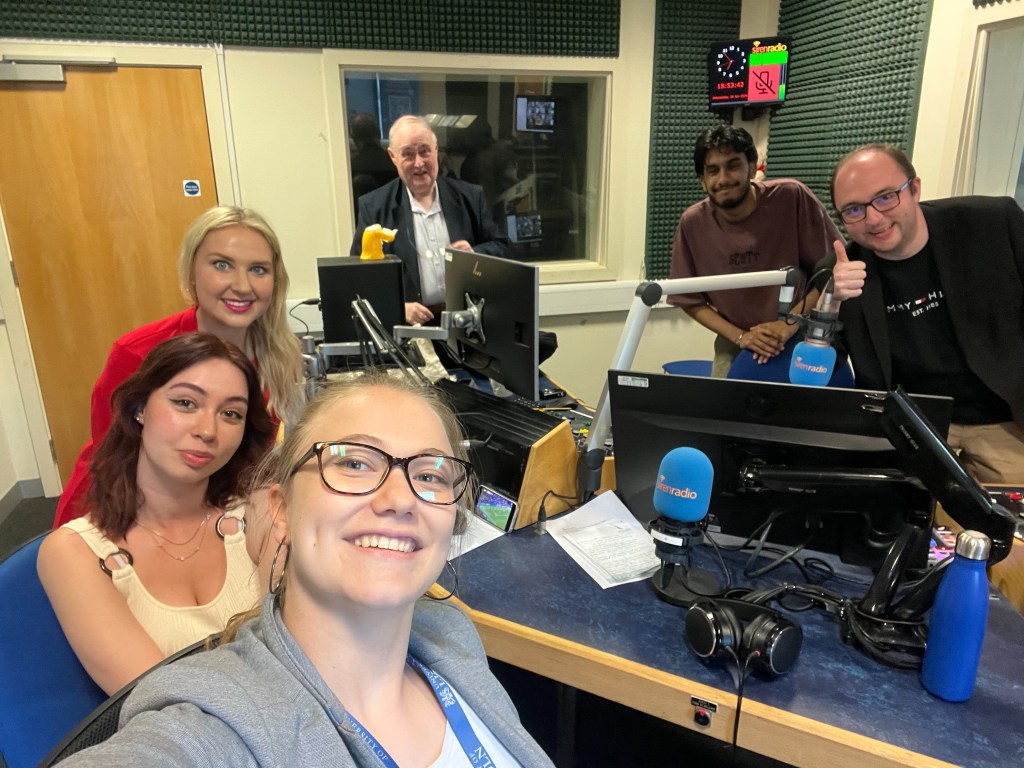
The last Midweek Live Drive from the Siren studio before its closure and licence transfer.
With 24 souls bravely covering topics, including Ed Sheeran’s to-be tour chef Stacy Leith, Newark Book Festival’s Jack Cornish, Doctor Who discussions with Alan Steven, Authors Jennie Fincg and William Coles, as well as Jessica Burtis, Tosin Soyemi, singers Chloey Rose and Victoria Simmonds, Doctor Who director Graeme Harper, Phil Hurd-Wood, royal commentator and arts critic Richard Fitzwilliams, Lily Holleman, Tessa Snart, Keith Taynton, Gabrella Peralta, Ciara Mullins, Cathy Manso, Ben Lewis, Fia Van Den Bogart, Jodie Harrison, Meryn Hobson, Ana Cosconel, Kara Joubert and Alex Lewczuk.
Jo Hemmings shares her thoughts on gratuities before Richard Fitzwilliams, Kara Joubert, Merryn Hobson, Sue Hayward and Alex Lewczuk discuss a brace of cinematic texts.
To start at the beginning would take too long, but I would say it all began with an insomniac 7-year-old, lying awake in bed, creating imaginary sequels and spin-offs in her head.
Thankfully, my appreciation for storytelling has since branched into different mediums of writing, from scripts to stories to journalism. It was the journalism course that led me to the University of Lincoln. It seemed the pragmatic choice, but has opened many exciting doors.
The phrase “your degree is what you make it” rings particularly true in media.
Many think that in order to get from A to B, you need to follow a particular path. I would say that unless you’re looking to become a doctor or lawyer your degree doesn’t have to define your career. In the creative fields, you have more flexibility to create your own opportunities.
Rachel Scarrott’s filmmaking group was one of those opportunities.
Starting university, I made a promise to take any filmmaking and screenwriting opportunity that came my way.
I recall the moment I pitched my short story as a script idea. Back then, my voice shook whenever I felt nervous. It felt like a stab in the dark. I didn’t know what I was doing, I just knew what I wanted to do.
“Go for it,” she said, “and direct it, too.”
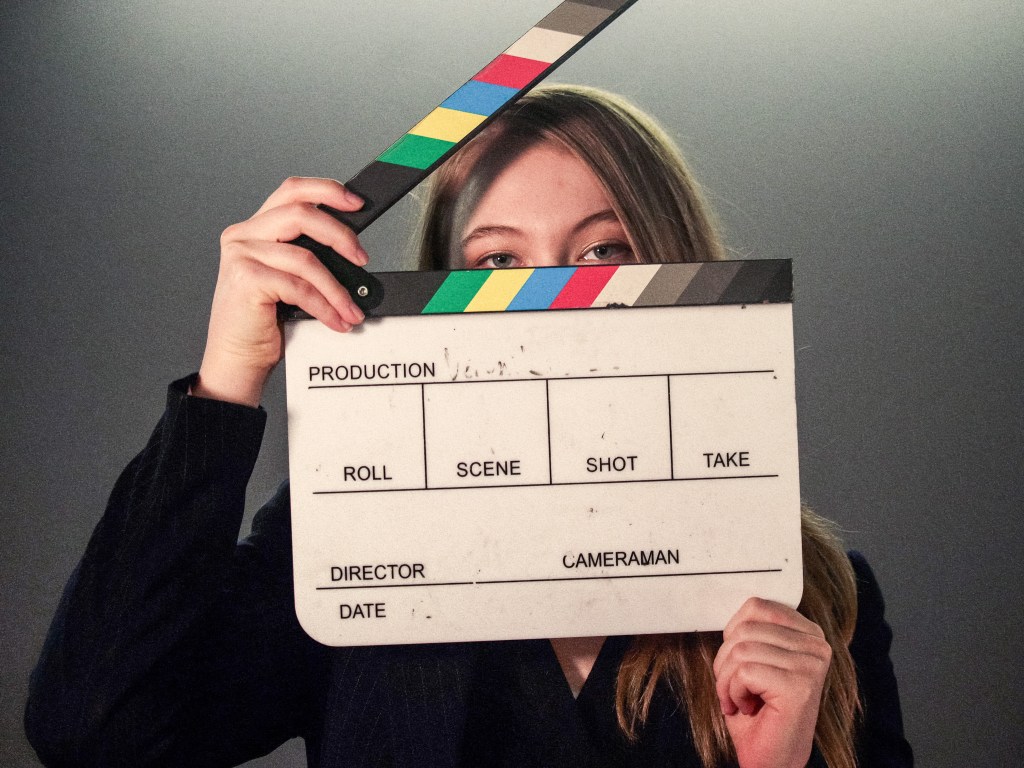
Filming took place over three days. Credit: Jemma Gray
So, with money from the University of Lincoln’s Student Initiative Fund, that’s exactly what I did.
Still, moving from pitch to production was a mission. For a start, I did not know students in the film department. Nor did I know much about directing, nor filmmaking for that matter.
I just knew how to write a script. Mostly.
So, I asked around. One contact led to the next and soon enough, we had a crew. That included James Learoyd, who, along with “Directing for Dummies,” showed me the ropes.
Post-production was a lengthy experience. In addition to communicating between a team of students, the script was evolving, and time was being spent to align everything so when we were shooting, we hit our targets.
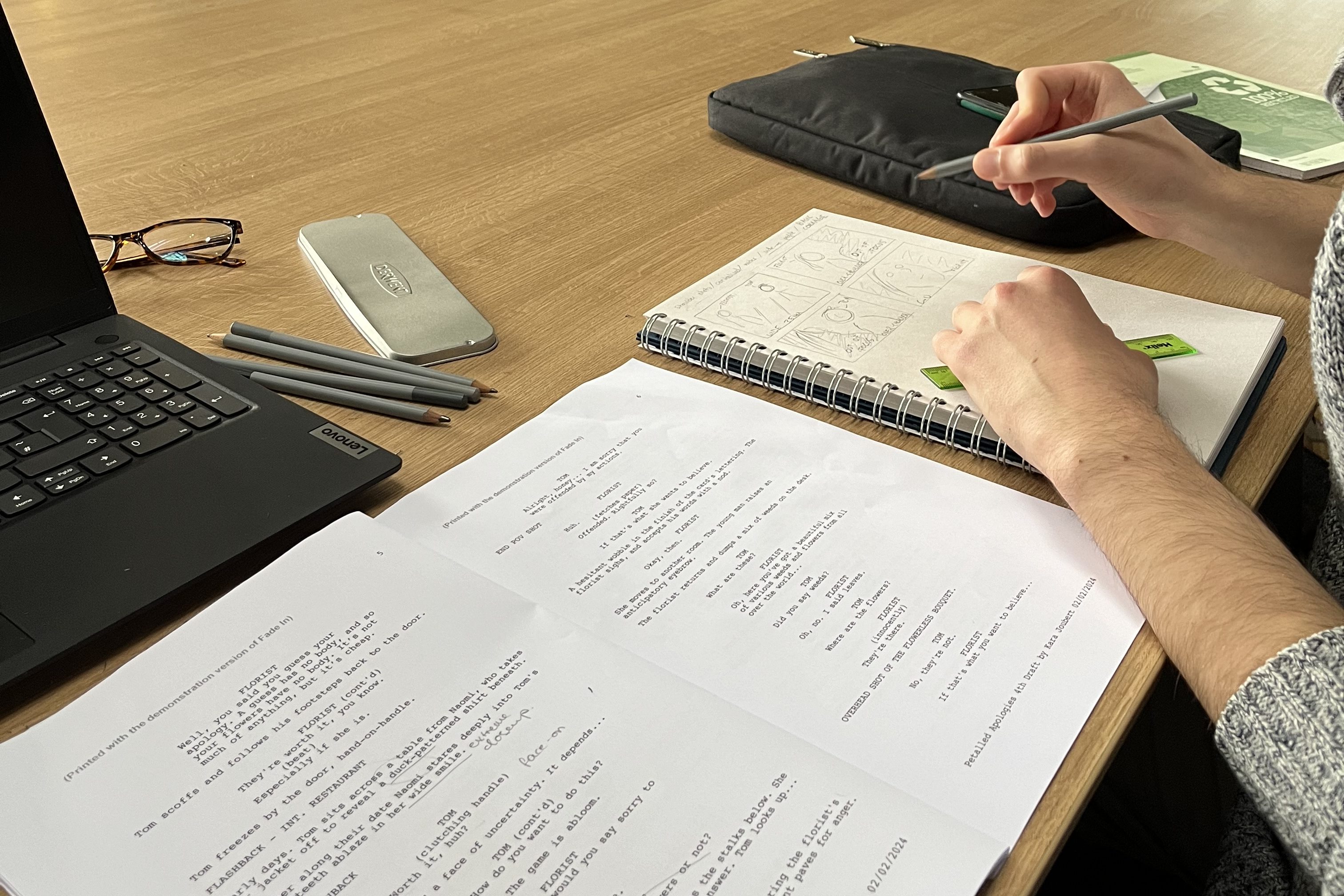
Storyboarding with James Learyod. Credit: Kara Joubert
Of course, that all took place alongside my studies. The balance was easy enough to maintain, although that meant sacrificing a lot of free time. Many people advocate for the “classic” university experience (although not as many as you may think) and that includes raves, parties, drinking and sex.
To put bluntly, I had other things to do – sorry, Bumble.
Lots was learnt in a short period of time. With extracurricular filmmaking alongside my journalism studies, it felt like educational whiplash. But working on the film never felt like a chore. It felt like a dream.
Shooting itself was a highlight. By the end of each long day, the team achieved something remarkable.
The actors were so focused on their performances. Working with them was a delight. They made my first directing experience a positive one, and I would happily do it again.
Today, Petalled Apologies is still in post-production. This has taken longer than expected, mostly due to everyone’s deadlines for assessments.
But I can’t wait to show you.
Overall, creating the short film Petalled Apologies has been a dance-inducing, caffeinated, stressful, fun experience. I have no alternative but to thank everyone for allowing me to have that.
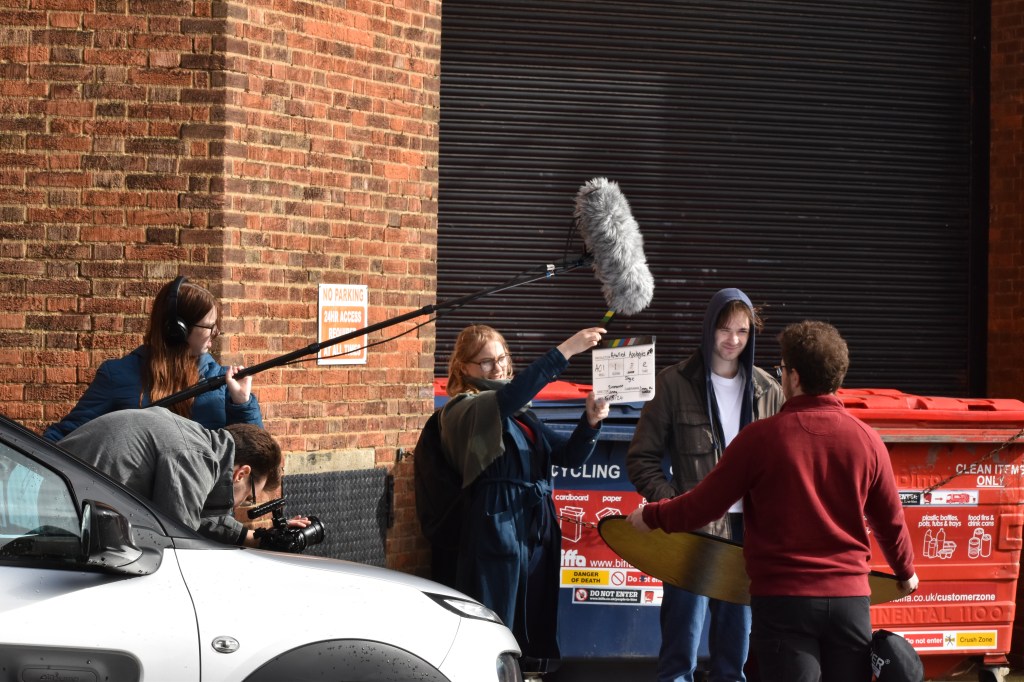
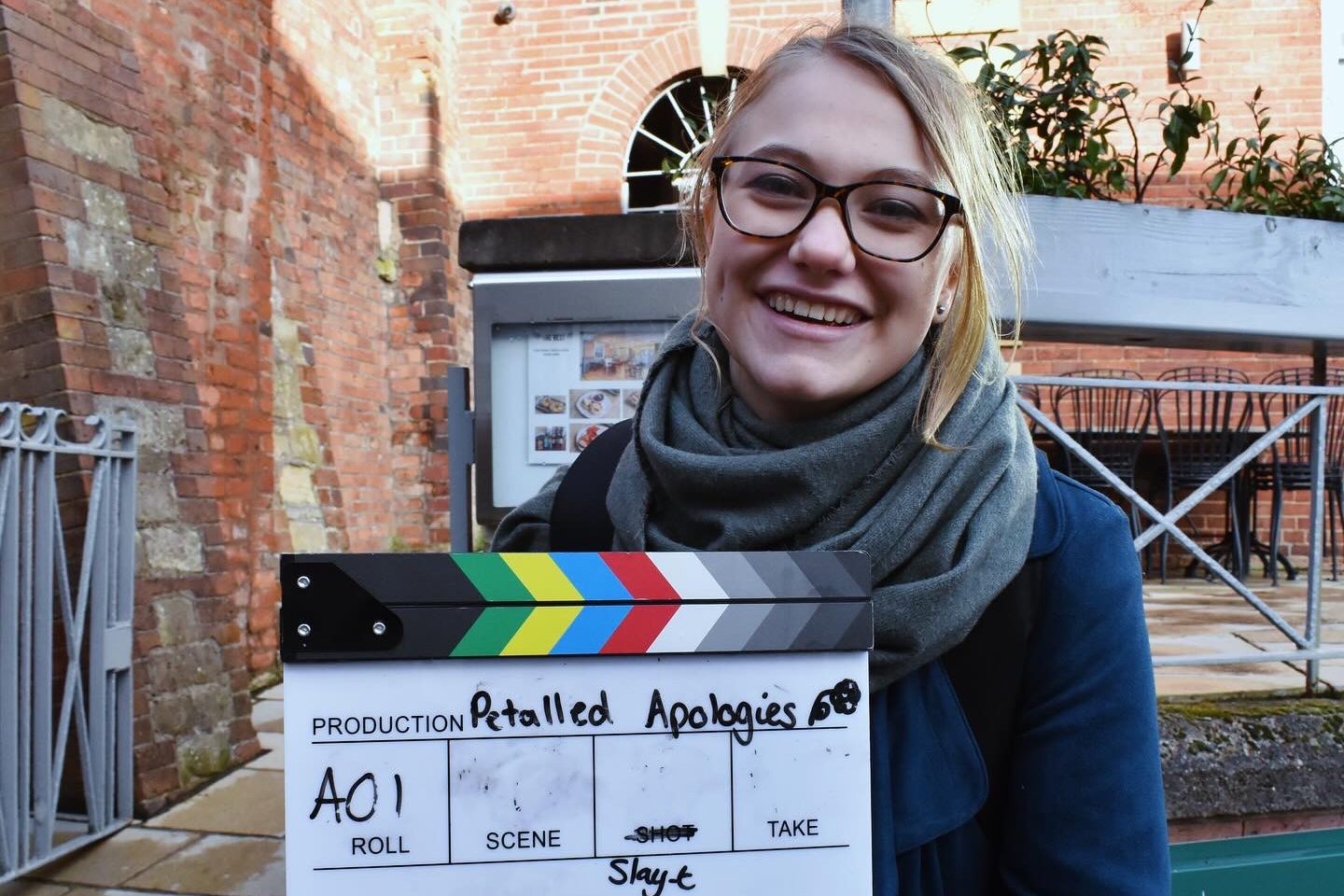
The crew “slayed” during production, despite a tight schedule. Credit: Jemma Gray
So, if you’re asking yourself: “how do I make a movie?”
Opportunities do exist. Look around. And then ask around. You’d be surprised how quickly one contact can turn into three. Being friendly and confident helps. Initially, I was terrified talking to people. However, my voice grew stronger during work experience.
“Work” for a lot of young British people means manning the tills at Tesco or the local charity shop. I was no different. It might not be the most exciting experience, but value this as an opportunity to exercise your social skills.
Your social skills, or at least, enthusiasm, can get you far. Speaking to people in-person is always more successful than over email. Talk to your peers, lecturers, industry professionals, the friends of friends…
But be selective about who you hold onto. Only invest in people who are decent and good at what they do. And remember, you can conscript anyone into helping you create a film, but you can’t force enthusiasm.
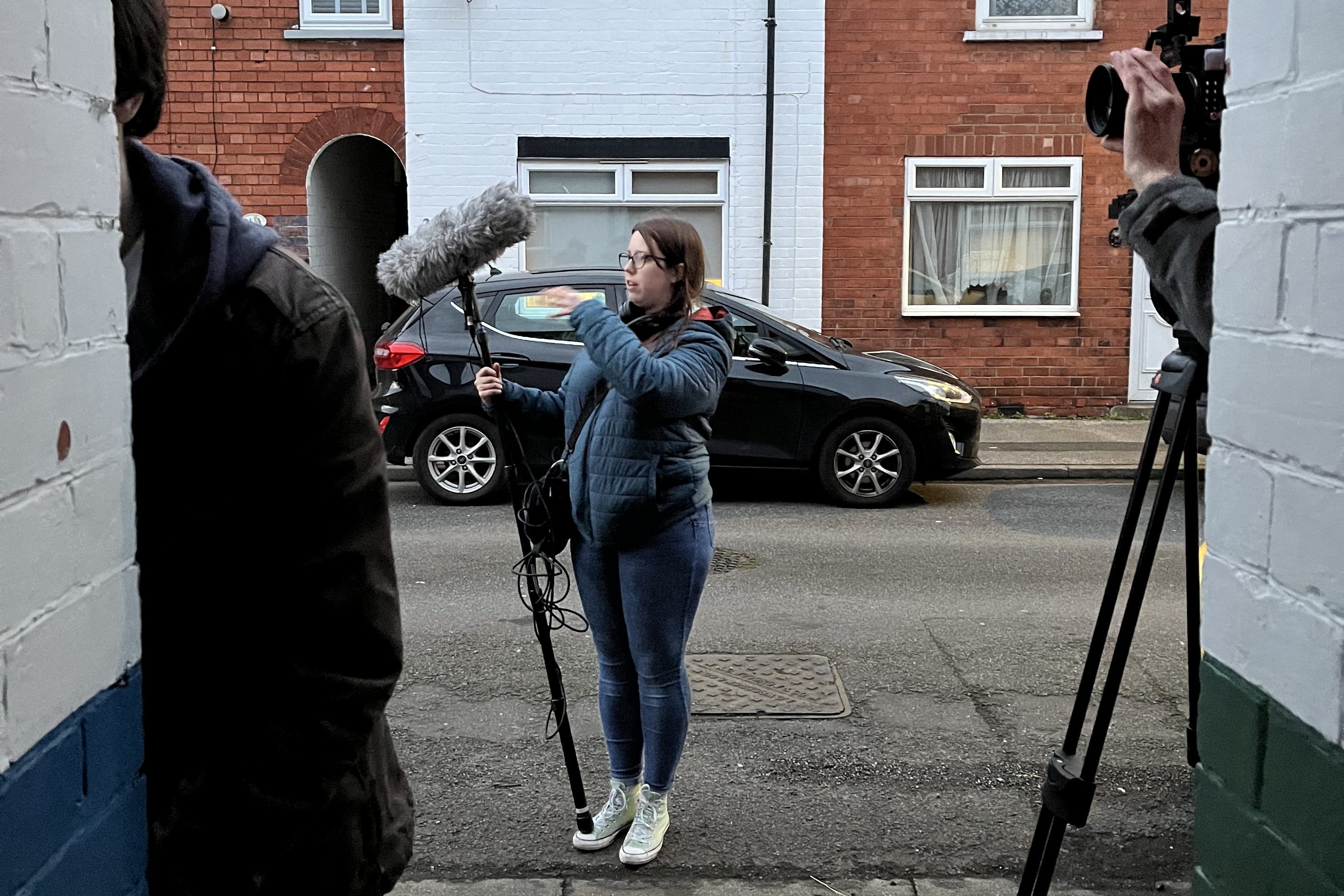
Most crew members such as Ellie Nielson had several roles. Credit: Kara Joubert
Apathy is a project killer. So, when gathering a crew, I’d suggest either finding people who are excited about your film and indifferent about their job, or people who are indifferent about your film and excited about their job. Ideally, find individuals who are excited about both.
Sometimes you can’t choose who you work with, so diplomacy and a strong footing might be needed when collaborating with certain individuals.
Expect everything to take longer, but hold people accountable to their own deadlines – including yourself.
Deadlines are important things to consider when looking for funding. Sometimes you can gather a crew and then start crowdfunding. However, you might be lucky enough to secure funding before having a crew. That also says to people that you’re serious about the matter, which encourages crew members to join.
Remember, most money is spent in production and post-production.
Pre-production (planning to film)
Production (filming)
Post-production (everything after)
Finding funding was easy for me, but only because I could speak with the filmmaking lecturers of the University of Lincoln. On top of that, we began a crowdfunder. But if you don’t have access to these sorts of contacts, you might need to be more creative with this.
Google helps. There are lots of grants and competitions around. You can also look for individuals and companies to sponsor your film, and offer executive producer roles in return.
Don’t be afraid to say you don’t know what you’re doing, but choose who you go to for advice. For me, that was James. Finding people who share your vision means that you can troubleshoot ideas with people who care.
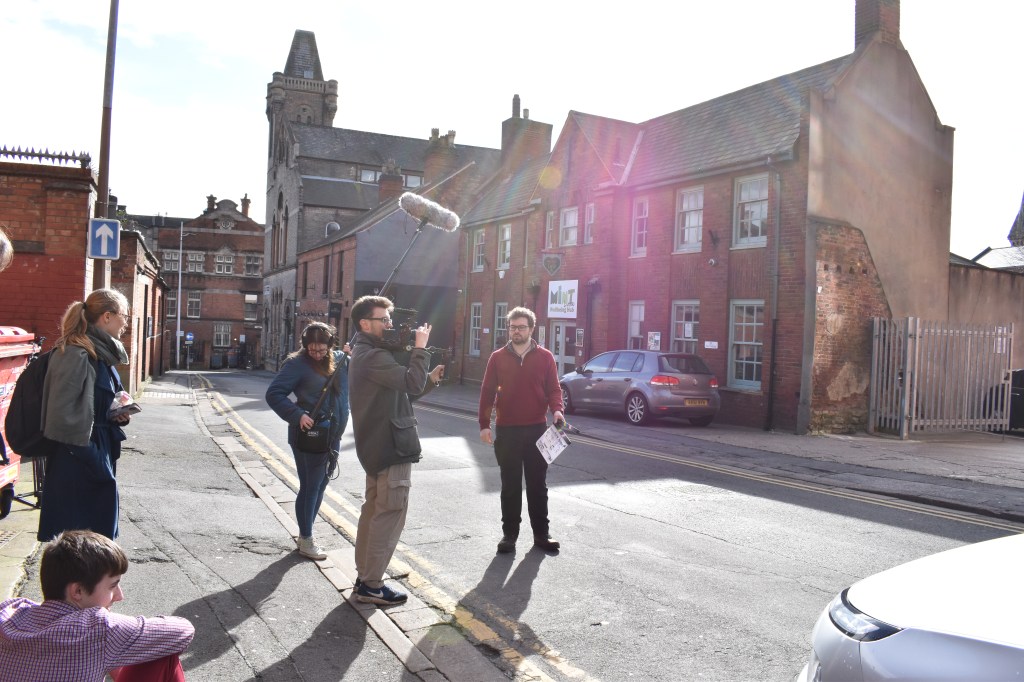
Filming took place around Lincoln. Credit: Jemma Gray
However, learn as much as you can in your own strength, remembering to refill that strength as to avoid burnout.
And finally, keep going! Yes, there will be trials (plus at least one on-set disaster) but resilience will pay off.
Your determination is your weapon. So, say yes to as many opportunities as possible. The phrase “your degree is what you make it” is good and well, but I’d take it a step further: life is what you make it.


 Kara Joubert: Writer, Journalist & Filmmaker