Tag: movie

  • Small Things Like These: understated acting saves vacant plot ★★★☆☆

    Small Things Like These: understated acting saves vacant plot ★★★☆☆

    Is Small Things Like These just another artsy-fartsy Cillian Murphy film? Well, mostly.

    The film focuses on Bill Furlong, a coal merchant who discovers dark secrets in the local convent. Pregnant women and girls are treated poorly by nuns in a sadistic environment of cruelty and carelessness. A quiet but sensitive soul, discovers this by accident. The film follows his actions thereafter.

    There is an overall oppressive atmosphere within the film, following themes of disconnected families, abuse and bullying.

    But fear not, for there is a happy ending. At 93 minutes long, there is a lot of unraveling that needs to take place before this ending is given.

    With an old film feel to it and its incredible performances, it is no surprise that this drama been given critical praise in film festivals.

    Regarding the visuals, the gritty soul of the film is shown through a soft lens. There is a genuine ache I feel when peeling back the layers of the actors performances, from the double takes of Bill’s wife and Bill’s gasps for relief, the acting is superior to most films being shown in the cinema today.

    Warm colours collide with cold moments, just as Bill Furlong’s (Cillian Murphy) sensitivity collides with the harsh world around him. His character is tragically human, fearing the cruelty of the world yet fearing the consequences of changing it.

    However, I am wary of falling into the artsy trap of calling this a masterpiece. Film critics sometimes fail to understand that unless you are a surveyor of the arts, you are not immediately interested in the deeper meaning or colour palette of a film.

    Thus, I will critique the film based on the face value. This is what matters to most movie-goers, after all.

    The storyline is made evident soon enough, although audiences who do not enjoy slow burns will certainly struggle to stay interested

    It does inspire thought, albeit through seemingly disjointed flashbacks and interactions throughout. Unfortunately, the disjointed nature of these occasionally boarders on incoherent.

    Thematically speaking, I feel Small Things Like These could have done better if condensed into a short film. However, the long-form storytelling is done with beautiful cinematography and incredible acting. It kept me interested, although I do wish more happened.

    The storyline was minimalist, which comes with its own disadvantages. The advantages are that audiences can focus more on the acting, visuals and subtle reveals of a character’s inner turmoil. But if you’re watching a film for the sake of watching a film, this might bore some.

    The ending is appreciated, and for a whole two minutes, I felt uplifted.

    Much like the coal Bill supplies, this is a slow burn that fails to warm the heart. Still, Small Things Like These is visually beautiful and a masterclass in understated acting.
  • Paddington in Peru: it was barely bearable ★★☆☆☆

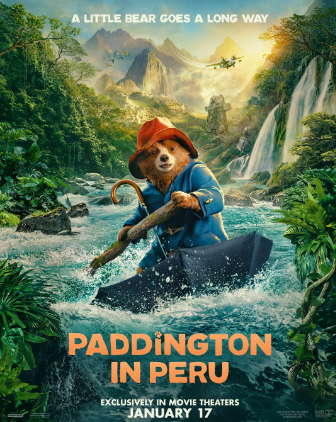
    Paddington in Peru: it was barely bearable ★★☆☆☆

    This is the third instalment in the Paddington series, and often with third instalments (such as Venom), it’s more of the same with less of the punch. 

    I can imagine the filmmakers had many challenges to face. Since the success of the first two films, Paddington has gained a following, and I am among them. I went into the cinema with cautiously high hopes, and unfortunately these were not filled. 

    The reasons included the lack of a feel-good side quest. In the previous films, a refreshing variety of subplots were present, generally stemming from the overall goal by the characters. I would argue there wasn’t any of that in this film, as the missing aunt and the pursuit of El Dorado were indistinguishable plots. Additional shenanigans were far and few between. 

    I also found that things happened because they were supposed to. There was no organic cause and effect but rather a cause, then effect. If I were to describe the plot, I would be using the phrase “and then” often. When a film does this, it risks losing its sense of a natural narrative, which I felt happened in this film. 

    I would also use the phrase “and apparently” a lot too. Apparently the young Paddington had an ancient bracelet on him when Aunt Lucy saved him. And apparently that bracelet was one she wore all the time. And apparently that bracelet has a greater purpose… despite us never having seen it in the previous films. 

    So it goes, with most films part of a saga, there are additional plot points added and backdated. Marvel does it almost every time it makes up a new enemy (I’m looking at you, Venom). But it irks me. It’s not world building, it’s world reframing. And it virtually always feels forced. 

    Maybe I’m being pessimistic. Maybe Paddington’s overwhelmingly positive attitude and the nun’s surprise musical number failed to inspire excessive jubilation with me after a long week of work. Maybe I was just tired. But from my perspective, the humor was less “haha” and more “heh”. 

    With the previous films, Paddington’s clumsiness often paved the way for particularly funny moments. But if you’ve seen the trailer for the film, you have most likely seen all of those scenes before walking into the cinema. 

    One of the many things that the previous films did successfully was incorporate themes of homesickness and family in a surprisingly emotive way. This film took on a different theme by focussing on the concept of leaving the nest, and the idea that someone from another country has “mixed feelings” about their homeland when their current home is elsewhere. 

    This was a great idea, and I thought the film would go into it in more detail. I was wrong. Rather, it was the bow that tied the beginning and end together with Paddington’s letters to home. 

    Creatively speaking, this film felt more formulaic than previous ones. There were nice moments but missed opportunities to show more of the unique animation and special effects that were in the first films. 

    As for the “surprise” plot twists, they were not. It is hardly a spoiler to say you can’t have the talented Olivia Coleman as a mere secondary character. 

    Despite the crying toddler watching the film to my side (and boy, did she cry), Paddington in Peru isn’t very emotional. The moments of conflict were more moments of inconvenience. Still, it isn’t a bad film. Merely an average one. Box office money aside, there were good intentions behind it. Paddington is loveable, iconic and very very polite. 

    Overall, the film is an easy watch for the family. But do not make the same mistake I did. Lower your expectations, and possibly get some sleep before going to the cinema. 

  • Review: The Wild Robot ★★★★ 1/2

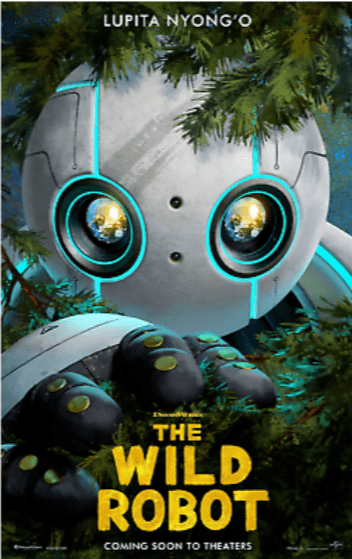
    Review: The Wild Robot ★★★★ 1/2

    The Wild Robot is a Family Adventure Animation produced by Dreamworks Animation and distributed by Universal Pictures.

    Clearly directed to a broad audience, the story has a variety of messages. From being an outsider to the effects of climate change, the trials of motherhood, the brutality of nature and the advantages of humanity, this film covers enough moral ground to be reasonably thought-provoking for the entire family.

    It explores these themes with a genuine simplicity that is subtle enough to avoid the trap of seeming preachy. One of my favourite family films is WALL-E, and I have heard plenty of comparisons being made – particularly with one scene in which Roz and her “son” has a moment of connection that inspires her memory to come back alive. However, WALL-E is quite heavy-handed with its message (skyscrapers of rubbish will do that). Meanwhile, The Wild Robot focuses less on the environmental issues caused by humanity and more on the humanity of the characters themselves.

    All character-led films have the potential to show their world through a lens you can easily sympathise with (take A Quiet Place for example). This film does the same, with characters that are all very entertaining.

    Even with her robotic characteristics, Ros’s Lupita Nyong’o creates both humour and humanity for the character she portrays. She isn’t the only one. Kit Conner’s character of Brightbill was also amazing, although I do wonder why they could not select an American actor for this. Other honourable mentions include Pedro Pascal as the mischievous Fink, Bill Nighty as Longneck and Catherine O’Hara as tired mother, Pinktail.

    One of the unique characteristics of this film was the language used between the characters. In blunt terms, it is blunt. Perhaps this is expected – in pop culture, robots are generally coded to be honest. If animals were to talk, then I can presume they would also be honest (if my nonchalant cat were to begin talking, I fear of the judgemental things he would tell me).

    The brutality of nature is discussed heavily in the film – be aware, you will see dead animals. But this topic is a ripe ground to explore the clash and harmony between humanity and nature. The film does well to show the chemistry between the best parts of humanity (the ability to care, even when it is not suitable for surviving), and the best parts of nature (adaptability).

    The more sombre matters surrounding the difficulties of survival and death are seasoned with dark humour. That being said, the humour is not pitch-black. In fact, the humour is about as light as dark humour can be, but there were times when I was laughing loudly in the cinema – maybe more so than the children.

    As for the plot, it was predictable for the first half. The trailer moments (found mostly in the first half) were perhaps wasted, I’d have found it more impactful if they were placed somewhere later in the film. I got worried thinking I had seen the best parts of the film so early on.

    But I found these moments enjoyable nonetheless. With stunning visuals and an amazing soundscape, the first part of the film has a level of creativity you would typically see in a short animation film. The second half of the film was less predictable, which accounted for the halfway lull I started to feel after what I thought was the climax.

    I was never completely bored, however. From a visual perspective, this film is essentially brain candy. With a hand-created digital art look, there is something artisanal in its approach. My eyes certainly appreciated that.

    In summary, The Wild Robot is a beautiful story with a lot of heart, incredible voice acting, and a decent story. Although the story was somewhat simplistic (as you might expect with a family film), the internal and external interactions between the characters were entertaining enough that I was invested throughout.

    The true antagonist was the issue of disconnect – in the beginning, between Roz and the animals, her “son” and then with the society that made her. Eventually, this is all resolved through the connection between the animals, inspired by Roz, who learns to connect with her inner “wild robot”.

  • Review: Batman (1966): A Fun and Light Slapstick Movie for Kids and the Young-at-Heart ★★★☆☆

    Review: Batman (1966): A Fun and Light Slapstick Movie for Kids and the Young-at-Heart ★★★☆☆

    Of course, to follow suit of the Batman lingo, this was a bat weird, bat film that made me question my bat sanity.

    Alongside the tight leggings, there were admittedly a lot of Dicks (of course I’m referring to the yacht captain’s reading habits and Robin’s real identity, nothing more…)

    But with the occasional random couple snogging, the instant outfit lever, and Catwoman’s need to randomly meow, I was often left asking, in a hazed state, “what was that?”

    My best guess: a slapstick movie, made to entertain the kids and make the parents ask themselves the same questions I have… Why the eyebrows on the mask? Why the shark bat-spray? Why the tight shorts?

    I can’t help but laugh at the dialogue. Like the Penguin’s facial prosthetics, it’s all a bit on the nose.

    In comparison, you can’t even consider Nolan’s and Robert Pattison’s Batman as surrounding the same character. If anything, this film was closer to The Lego Batman Movie, and with nearly as much plastic in the form of giant signs and toys to make Batman’s situation as obvious as possible for its presumably young and young-at-heart audiences.

    Minus the very sad (not really) off-screen death of a porpoise we never meet, and Batman’s punches that fall about a mile from his enemies’ faces, there is no real violence or emotional investment.

    And with the Pentagon busy playing board games, riddles in which the answer is absurdly “banana”, and lines such as “some days you just can’t get rid of a bomb…” it’s a strange mix.

    The biggest irk I had with this was the pace at which the film progresses. Now, perhaps I am not its target audience (although I’d be lying if I said I didn’t find the campness of Batman 1966 hilarious). However, I found that the stakes could have been higher (I didn’t care much for the world leaders), and the whole Kitka situation could have been condensed a bit.

    The story seemed all over the place, but maybe this was the idea?

    Either way, it was fun, it was light, and it was bat-shit crazy.