Tag: movies

  • Directing, Writing and Acting in a Short Film: My Journey with ‘Time Line’

    Directing, Writing and Acting in a Short Film: My Journey with ‘Time Line’

    “This is the time Line, when can I direct your call?”

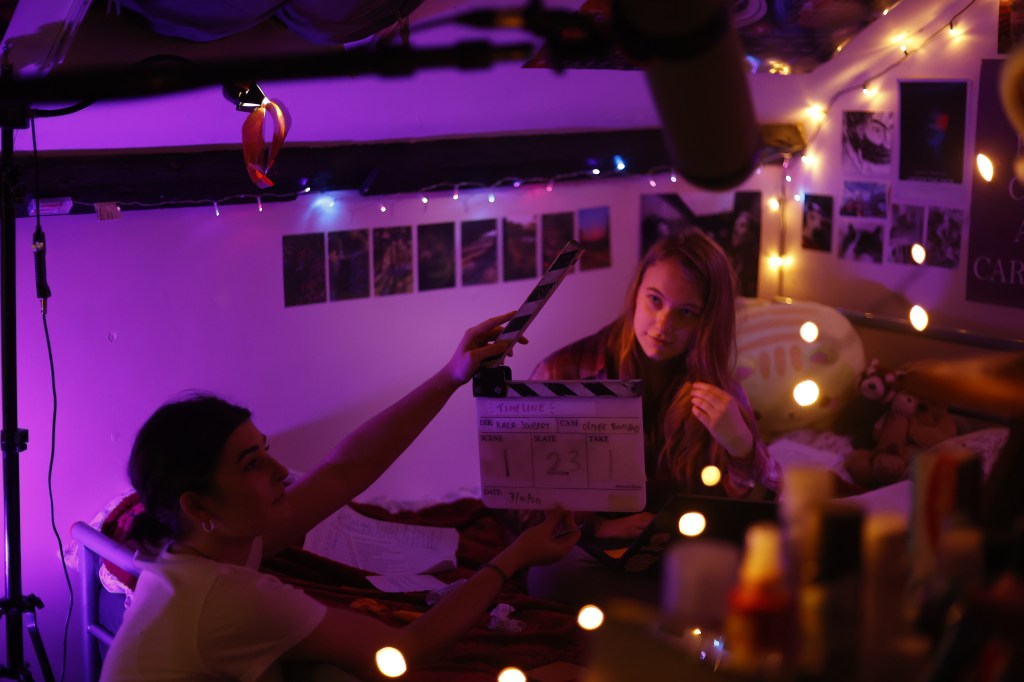
    I wrote the script for Time Line under creative boundaries. It was going to have a short running time, a small cast, and only a few locations. The theme was “time” and it was something I wanted to laugh at.

    I never expected to write another script in 2024. I thought one was enough. I intended to take a break and focus on my journalism studies. Until one of the filmmaking lecturers asked me the question:

    “Are you sure? It could be fun.”

    Well, the simplicity was nice while it lasted.

    I jest. The quiet was very boring and I was happy to be persuaded to work on another film again. I wrote the first messy draft in an hour or two and christened it “Time Line”.

    “Time Line” had a deadline and that was December. I was going abroad shortly after that, and most students (and crew) would be leaving for the Christmas holidays after the second weekend into December. That was three months away: a little less than my first short film’s deadline.

    But I had something that past me did not have before:

    The headache-inducing, tear-jerking, stress-soaked experience of making a short film for the first time.

    I was seasoned (lightly salted, more like). But I had some experience under my belt thanks to my previous film, and I intended to use it wisely.

    Step one: find money and a crew

    Regarding money, I had none. This contrasted with my previous film, which was luckily grant-funded.

    Crew were much easier to come by. I could reach out to people I met through Petalled Apologies. The legendary cinematographer Oliver Townsend was involved, but we still didn’t have a full crew.
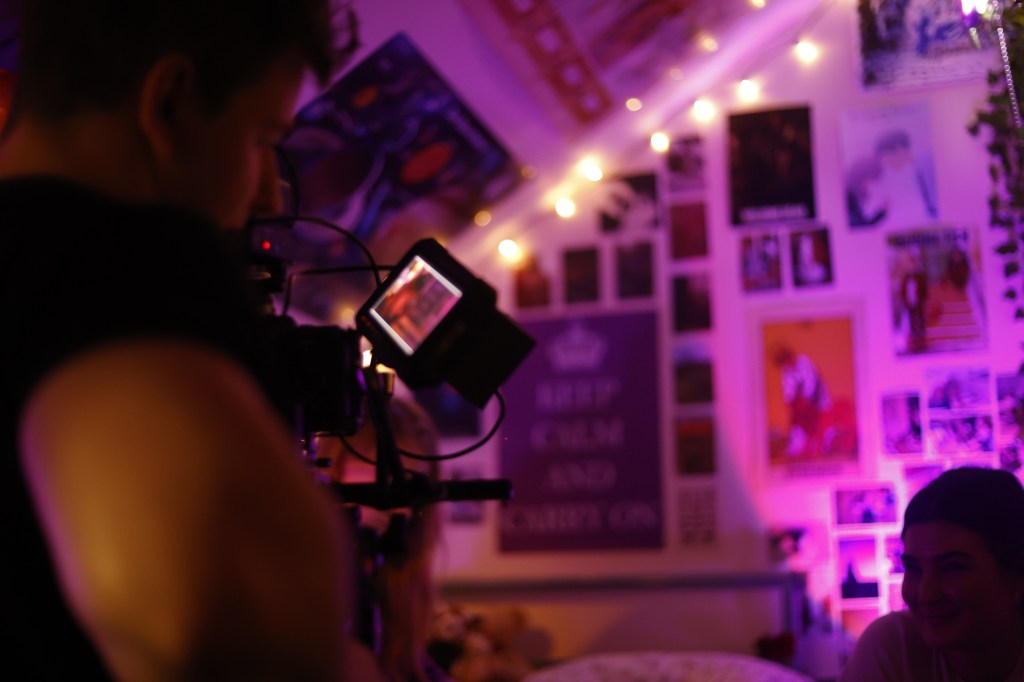
    Step one was not fully achievable on my own, so I needed to enact step two.

    Step two: find someone who can find money and a crew

    The role of a producer is not something to take lightly. In a nutshell, they produce a film. But that means a lot more than one word. They produce money, crew, cast, locations, schedules, and signatures for paperwork. That’s a lot to produce if you are just one person.

    So I would recommend getting more than one producer.

    In the end, there were probably three of us.

    But every one of us had our roles and responsibilities, and I can not thank the other producers enough. M Carter organised the paperwork side of things and enlisted some of the crew. Meanwhile, Maddie Oastler helped to organise the bake sale and helped M. She also stepped in as the assistant director on the day of shooting.

    Together, we raised around £200.

    Step three: locations and cast

    We needed two locations and two actors.

    Sounds straightforward, right?

    I thought so too.

    For the office, I adventured into the city to try to find places willing to have us film there. We found gold with one location, but they could not let us film on a weekend.

    Eventually, I asked the university if we could film on the premises. They said yes, but we still needed a student’s room for “Kate’s” scenes.

    I took to social media and asked for anyone willing to allow us to film in their accommodation. A student got back to me and gave us permission to film in her room.

    M Carter organised the schedule, which meant we had a time and place to film.

    Admittedly, we waited a little late before finding a cast. That wasn’t anyone’s fault. We used the platform mandy.com to find applicants but ran into an issue with the account and so had no cast a week before shooting.

    I managed to persuade a friend and colleague to take on the role as Time Line Operator.
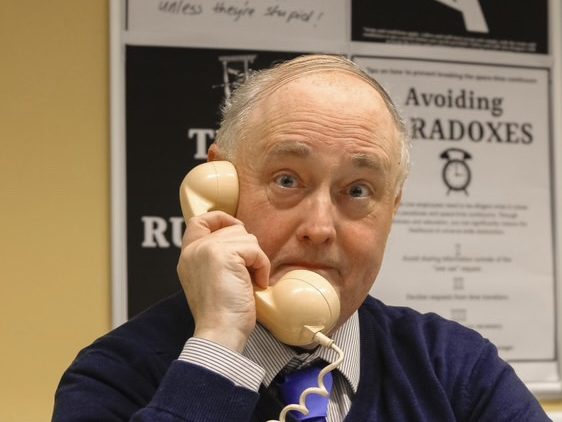
    Alex Lewczuk harnessing his inner “Time Line Operator”

    …and I was about to make my debut as an actress.

    Step four: go with your gut

    Confession time: unless you class primary school plays such as A Midsummer Night’s Dream and my Munchkin performance from the Wizard of Oz as “acting”, I had never acted before.

    For a while after considering myself as “Kate”, I sat in a state of disbelief. I alternated between knowing I was capable of portraying her and doubting that fact.

    There were a few last-minute alternatives, but nothing gave me peace. It was partly the last-minuteness of it, and partly the fact that I knew I could do it. I had to listen to my gut.

    As an autistic woman, I have learned to mask efficiently. Nobody can really generalise something like autism, but I think a lot of autistic people in social environments and workplaces have to adapt to become acutely aware of their face, body language and tone.

    In essence, I had not acted before. However, I know what it means to measure body language. This would feel a bit like that, but taken to an extreme.

    Step five: doubt your gut (optional)

    I think most people taking on large projects at some point ask themselves: “What on Earth am I doing?”

    Several answers can flood in all at once:

    “Doing something great.”

    “Doing something crazy.”

    “Making a fool of yourself.”

    There was a brief time when I was surrounded by people who would show no hesitation in telling me that. “Stupid, irrational, silly and weird” are childish words, but they can linger in one’s mind if you let them.

    Thankfully, I have good people surrounding me who are really encouraging. This is an important element of taking on a big project: a great support system.

    You can only go so far as one person.

    Step six: fear and embarrassment are hurdles you have to jump.

    I have never been drunk a day in my life.

    I have only observed drunkenness from a distance thinking: “Thank goodness I never need to know what that feels like!”
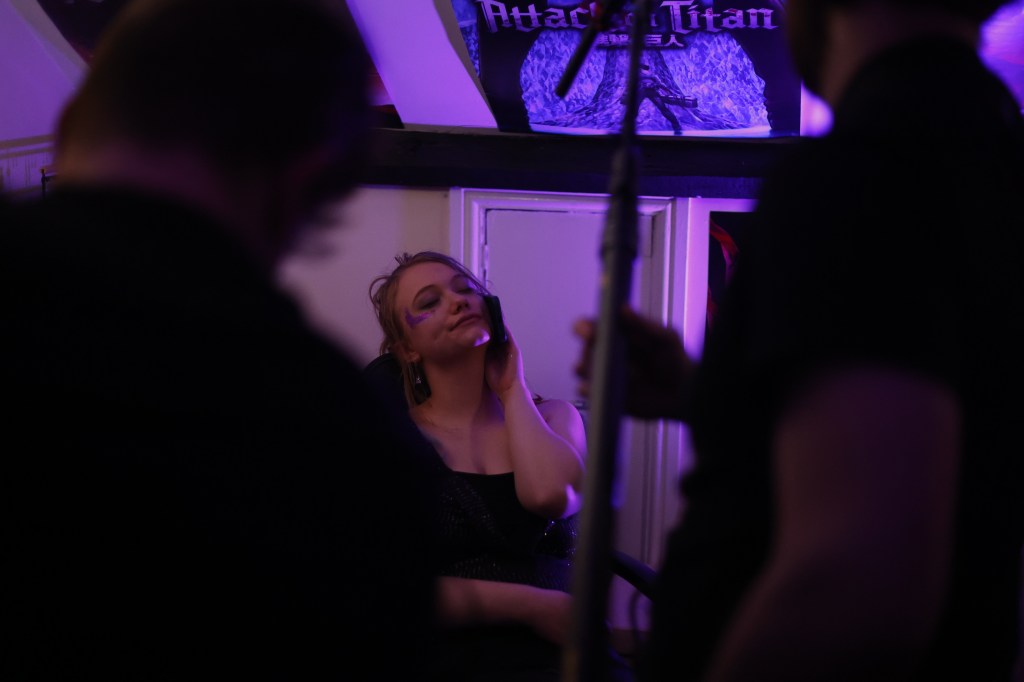
    But Kate, my character, does. She gets really tipsy after a night out. I wrote it as such and now I had to act it.

    If I let myself think about all the ways I could embarrass myself, I would never have done it. If I let myself feel any fear, then it would have shown. I was the director as well as lead actress. Being a leader, any fear from my end might have impacted the crew as well.

    So, I had to jump it. Give up my right to feel afraid. Let myself feel only a little, so I can ride the wave of anxiety as opposed to being drowned by it. After all, fear mixed with excitement is a great alternative to caffeine.

    With embarrassment, I have found that it is something to be embraced. It’s bound to be a part of life. If I avoided embarrassment while acting, I figured I would only embarrass myself more.

    So I dove straight into it. Slurred speech, messy hair, fake vomit and all.

    True, I made some mistakes at first. As the writer of the script, I had no excuse to forget my lines!

    However, I managed to strike a balance between my pre-prepared director’s notes, experimenting on the spot and self-critiquing. In the end, it actually ended up being quite fun!
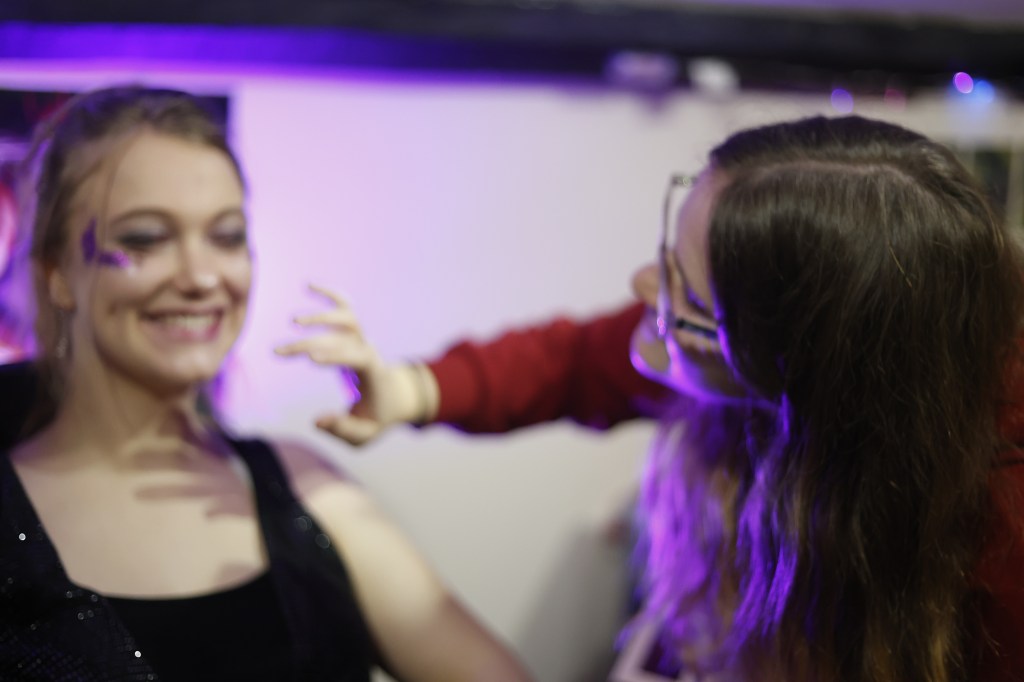
    In fact, I would happily act again.

    Step seven: celebrate the victories

    This step is an important one. Anyone taking on a big project is likely a busy person overall, so taking the time to breathe is just as important as finding the time to be productive.

    After filming Time Line, everyone had a Christmas off before reconvening back for the post-production stage. That included myself, which was perfect, as it gave me the time to get prepared to study abroad.

    Now I am writing from Brisbane, Australia. Being involved in post-production from halfway around the planet is a funny thing. Thankfully, I managed to sit with the editor, Finlay Dodd, before leaving. However, there is still plenty to do before Time Line can make its film festival debut.

    Stay tuned to find out how it goes.

  • Review: Super/Man: The Christopher Reeve Story ★★★★☆

    Review: Super/Man: The Christopher Reeve Story ★★★★☆

    I did not manage to see this film when it was released in the cinema. However, with a 11 hour flight to LA, I suddenly had a lot of time and opportunity on my hands.

    The tragedy and triumph of Christopher Reeve is well-established for anyone who lived during his time and has access to Google.

    I am a sceptical type when it comes to media forcing emotions upon me, and milking a situation for the sake of milking a tear. I’d much rather the story be told naturally, and for the emotions to naturally swell.

    However, the depth and details of this have been beautifully portrayed by the documentary makers who interviewed those closest to him.

    Other great techniques used by the documentary makers included the use of music and footage from Christopher Reeve’s films.

    Within the first three minutes, you know exactly what you’re going to watch.

    Mr. Reeve is depicted in an overall positive manner, but his flaws were explored as well. I found this was important, as with any story about humanity.

    As well as humanity, it is also a story about tragedy, loss and taking the resilience of a bad situation and turning it into a “superpower” as to generate change.

    The only reason I didn’t give this a five star was the pacing and timeline. The documentary was non-linear, built together with connecting threads if thematic elements, which moved from Reeve’s acting work, to his family, to his injury, and revisited each one in no obvious order.

    This is more a case of preference, but I would have liked the timeline to be directed by sequential order. Still, it works for the documentary in the sense that it doesn’t take away from it.

    The pace was good on a whole, although I would have liked there to be more time replacing some of the run time with an exploration into the legacy that Reeves left behind.

    The tragedy behind Christopher Reeve is a prevalent theme, but this is a natural by-product of the story, rather than its main emotional composition.

    I was very impressed, and felt there was a genuine element of tenderness involved. One that did not need to be milked beyond what seemed natural

    The story speaks for itself, and the documentary makers involved knew that I would likely cry without them trying.

  • Small Things Like These: understated acting saves vacant plot ★★★☆☆

    Small Things Like These: understated acting saves vacant plot ★★★☆☆

    Is Small Things Like These just another artsy-fartsy Cillian Murphy film? Well, mostly.

    The film focuses on Bill Furlong, a coal merchant who discovers dark secrets in the local convent. Pregnant women and girls are treated poorly by nuns in a sadistic environment of cruelty and carelessness. A quiet but sensitive soul, discovers this by accident. The film follows his actions thereafter.

    There is an overall oppressive atmosphere within the film, following themes of disconnected families, abuse and bullying.

    But fear not, for there is a happy ending. At 93 minutes long, there is a lot of unraveling that needs to take place before this ending is given.

    With an old film feel to it and its incredible performances, it is no surprise that this drama been given critical praise in film festivals.

    Regarding the visuals, the gritty soul of the film is shown through a soft lens. There is a genuine ache I feel when peeling back the layers of the actors performances, from the double takes of Bill’s wife and Bill’s gasps for relief, the acting is superior to most films being shown in the cinema today.

    Warm colours collide with cold moments, just as Bill Furlong’s (Cillian Murphy) sensitivity collides with the harsh world around him. His character is tragically human, fearing the cruelty of the world yet fearing the consequences of changing it.

    However, I am wary of falling into the artsy trap of calling this a masterpiece. Film critics sometimes fail to understand that unless you are a surveyor of the arts, you are not immediately interested in the deeper meaning or colour palette of a film.

    Thus, I will critique the film based on the face value. This is what matters to most movie-goers, after all.

    The storyline is made evident soon enough, although audiences who do not enjoy slow burns will certainly struggle to stay interested

    It does inspire thought, albeit through seemingly disjointed flashbacks and interactions throughout. Unfortunately, the disjointed nature of these occasionally boarders on incoherent.

    Thematically speaking, I feel Small Things Like These could have done better if condensed into a short film. However, the long-form storytelling is done with beautiful cinematography and incredible acting. It kept me interested, although I do wish more happened.

    The storyline was minimalist, which comes with its own disadvantages. The advantages are that audiences can focus more on the acting, visuals and subtle reveals of a character’s inner turmoil. But if you’re watching a film for the sake of watching a film, this might bore some.

    The ending is appreciated, and for a whole two minutes, I felt uplifted.

    Much like the coal Bill supplies, this is a slow burn that fails to warm the heart. Still, Small Things Like These is visually beautiful and a masterclass in understated acting.

  • Review: The Wild Robot ★★★★ 1/2

    Review: The Wild Robot ★★★★ 1/2

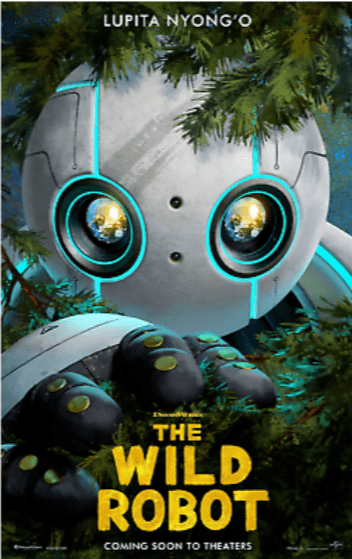
    The Wild Robot is a Family Adventure Animation produced by Dreamworks Animation and distributed by Universal Pictures.

    Clearly directed to a broad audience, the story has a variety of messages. From being an outsider to the effects of climate change, the trials of motherhood, the brutality of nature and the advantages of humanity, this film covers enough moral ground to be reasonably thought-provoking for the entire family.

    It explores these themes with a genuine simplicity that is subtle enough to avoid the trap of seeming preachy. One of my favourite family films is WALL-E, and I have heard plenty of comparisons being made – particularly with one scene in which Roz and her “son” has a moment of connection that inspires her memory to come back alive. However, WALL-E is quite heavy-handed with its message (skyscrapers of rubbish will do that). Meanwhile, The Wild Robot focuses less on the environmental issues caused by humanity and more on the humanity of the characters themselves.

    All character-led films have the potential to show their world through a lens you can easily sympathise with (take A Quiet Place for example). This film does the same, with characters that are all very entertaining.

    Even with her robotic characteristics, Ros’s Lupita Nyong’o creates both humour and humanity for the character she portrays. She isn’t the only one. Kit Conner’s character of Brightbill was also amazing, although I do wonder why they could not select an American actor for this. Other honourable mentions include Pedro Pascal as the mischievous Fink, Bill Nighty as Longneck and Catherine O’Hara as tired mother, Pinktail.

    One of the unique characteristics of this film was the language used between the characters. In blunt terms, it is blunt. Perhaps this is expected – in pop culture, robots are generally coded to be honest. If animals were to talk, then I can presume they would also be honest (if my nonchalant cat were to begin talking, I fear of the judgemental things he would tell me).

    The brutality of nature is discussed heavily in the film – be aware, you will see dead animals. But this topic is a ripe ground to explore the clash and harmony between humanity and nature. The film does well to show the chemistry between the best parts of humanity (the ability to care, even when it is not suitable for surviving), and the best parts of nature (adaptability).

    The more sombre matters surrounding the difficulties of survival and death are seasoned with dark humour. That being said, the humour is not pitch-black. In fact, the humour is about as light as dark humour can be, but there were times when I was laughing loudly in the cinema – maybe more so than the children.

    As for the plot, it was predictable for the first half. The trailer moments (found mostly in the first half) were perhaps wasted, I’d have found it more impactful if they were placed somewhere later in the film. I got worried thinking I had seen the best parts of the film so early on.

    But I found these moments enjoyable nonetheless. With stunning visuals and an amazing soundscape, the first part of the film has a level of creativity you would typically see in a short animation film. The second half of the film was less predictable, which accounted for the halfway lull I started to feel after what I thought was the climax.

    I was never completely bored, however. From a visual perspective, this film is essentially brain candy. With a hand-created digital art look, there is something artisanal in its approach. My eyes certainly appreciated that.

    In summary, The Wild Robot is a beautiful story with a lot of heart, incredible voice acting, and a decent story. Although the story was somewhat simplistic (as you might expect with a family film), the internal and external interactions between the characters were entertaining enough that I was invested throughout.

    The true antagonist was the issue of disconnect – in the beginning, between Roz and the animals, her “son” and then with the society that made her. Eventually, this is all resolved through the connection between the animals, inspired by Roz, who learns to connect with her inner “wild robot”.

  • How I made a movie

    How I made a movie

    To start at the beginning would take too long, but I would say it all began with an insomniac 7-year-old, lying awake in bed, creating imaginary sequels and spin-offs in her head.

    Thankfully, my appreciation for storytelling has since branched into different mediums of writing, from scripts to stories to journalism. It was the journalism course that led me to the University of Lincoln. It seemed the pragmatic choice, but has opened many exciting doors.

    The phrase “your degree is what you make it” rings particularly true in media.

    Many think that in order to get from A to B, you need to follow a particular path. I would say that unless you’re looking to become a doctor or lawyer your degree doesn’t have to define your career. In the creative fields, you have more flexibility to create your own opportunities.

    Rachel Scarrott’s filmmaking group was one of those opportunities.

    Starting university, I made a promise to take any filmmaking and screenwriting opportunity that came my way.

    I recall the moment I pitched my short story as a script idea. Back then, my voice shook whenever I felt nervous. It felt like a stab in the dark. I didn’t know what I was doing, I just knew what I wanted to do.

    “Go for it,” she said, “and direct it, too.”

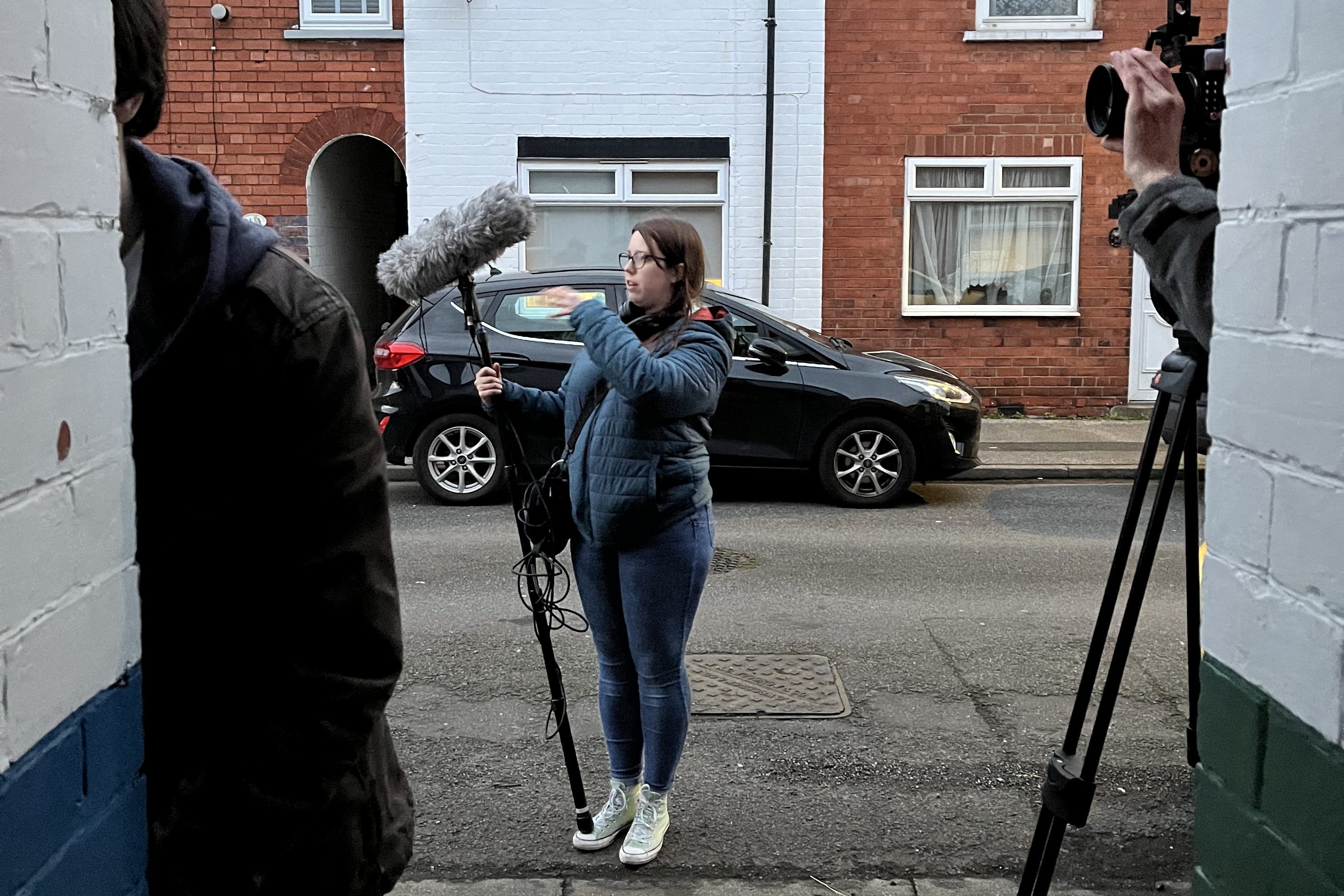
    Filming took place over three days. Credit: Jemma Gray

    So, with money from the University of Lincoln’s Student Initiative Fund, that’s exactly what I did. 

    Still, moving from pitch to production was a mission. For a start, I did not know students in the film department. Nor did I know much about directing, nor filmmaking for that matter.

    I just knew how to write a script. Mostly.

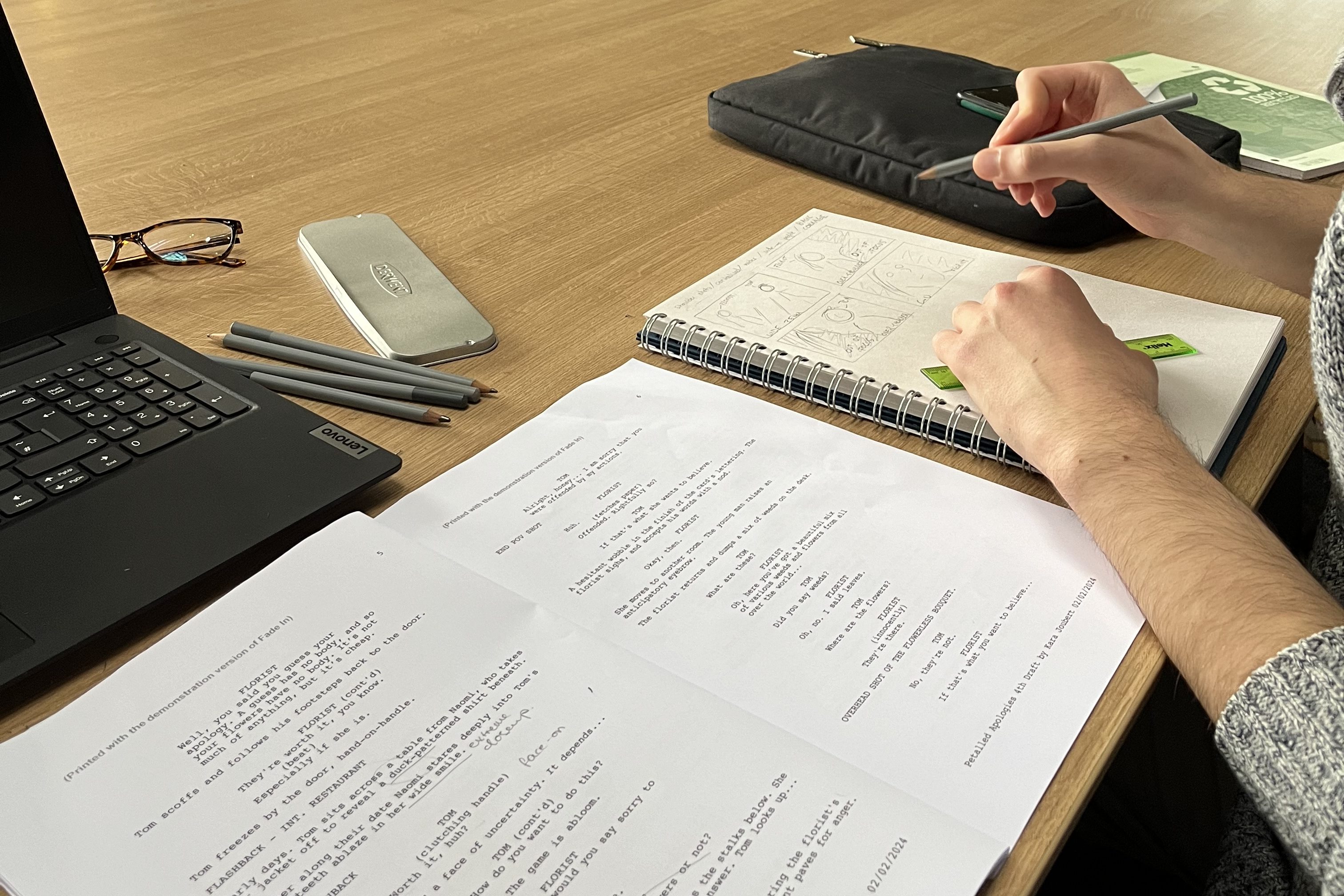
    So, I asked around. One contact led to the next and soon enough, we had a crew. That included James Learoyd, who, along with “Directing for Dummies,” showed me the ropes.

    Post-production was a lengthy experience. In addition to communicating between a team of students, the script was evolving, and time was being spent to align everything so when we were shooting, we hit our targets.

    Storyboarding with James Learyod. Credit: Kara Joubert

    Of course, that all took place alongside my studies. The balance was easy enough to maintain, although that meant sacrificing a lot of free time. Many people advocate for the “classic” university experience (although not as many as you may think) and that includes raves, parties, drinking and sex.

    To put bluntly, I had other things to do – sorry, Bumble.

    Lots was learnt in a short period of time. With extracurricular filmmaking alongside my journalism studies, it felt like educational whiplash. But working on the film never felt like a chore. It felt like a dream. 

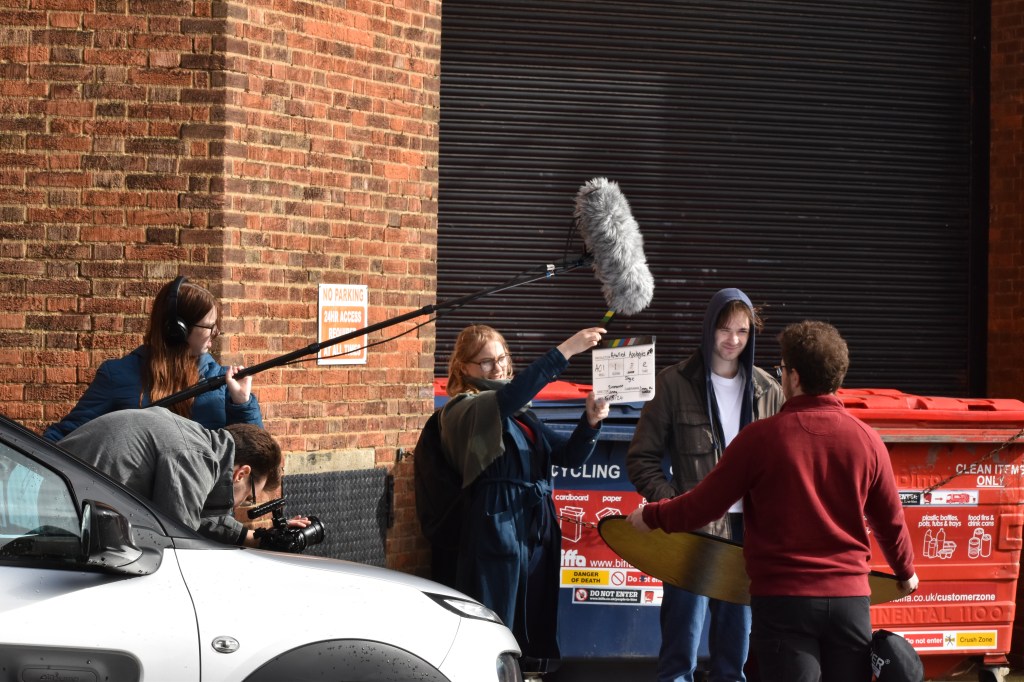
    Shooting itself was a highlight. By the end of each long day, the team achieved something remarkable.

    The actors were so focused on their performances. Working with them was a delight. They made my first directing experience a positive one, and I would happily do it again.

    Today, Petalled Apologies is still in post-production. This has taken longer than expected, mostly due to everyone’s deadlines for assessments. 

    But I can’t wait to show you.

    Overall, creating the short film Petalled Apologies has been a dance-inducing, caffeinated, stressful, fun experience. I have no alternative but to thank everyone for allowing me to have that.

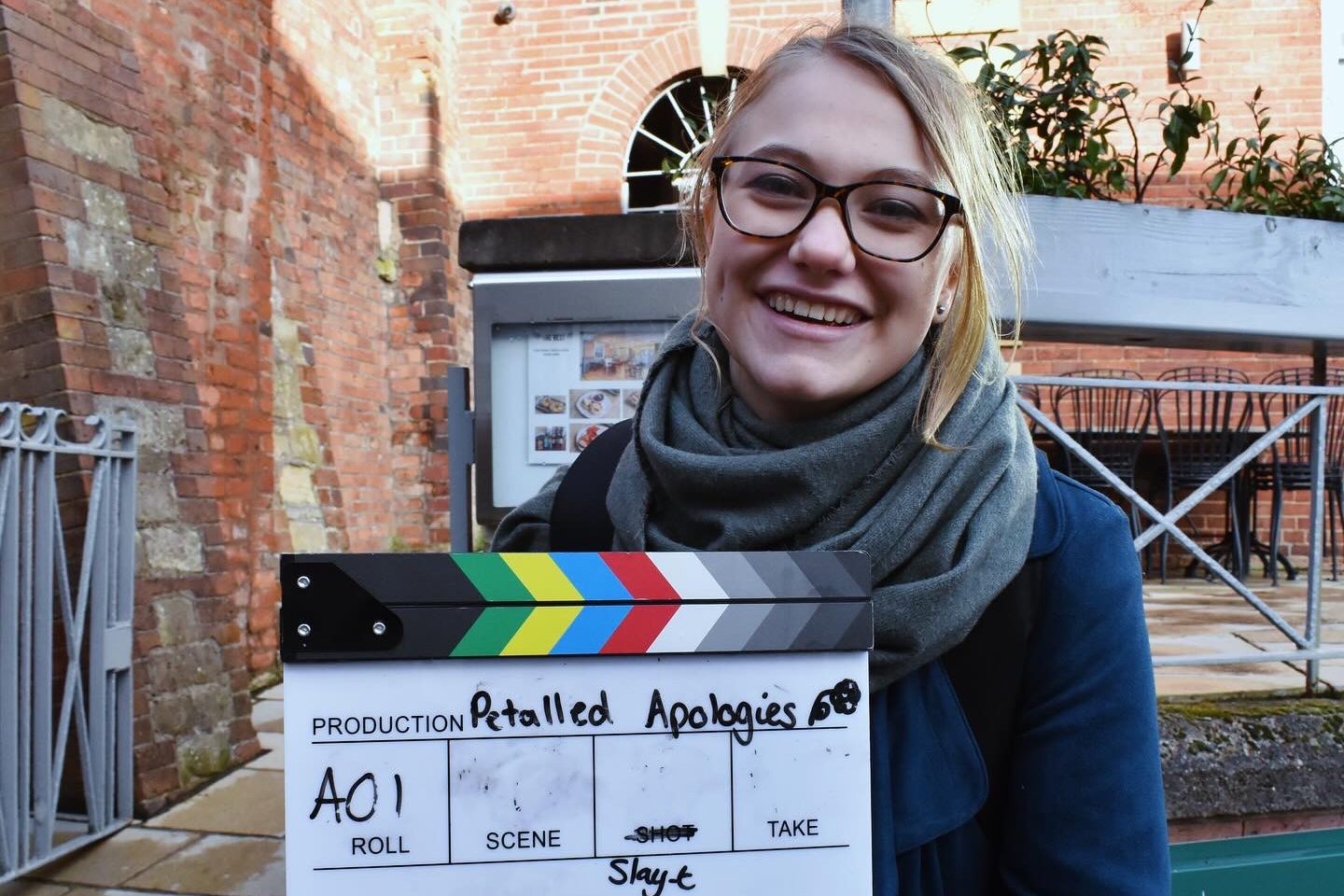
    The crew “slayed” during production, despite a tight schedule. Credit: Jemma Gray

    So, if you’re asking yourself: “how do I make a movie?”

    Opportunities do exist. Look around. And then ask around. You’d be surprised how quickly one contact can turn into three. Being friendly and confident helps. Initially, I was terrified talking to people. However, my voice grew stronger during work experience.

    “Work” for a lot of young British people means manning the tills at Tesco or the local charity shop. I was no different. It might not be the most exciting experience, but value this as an opportunity to exercise your social skills.

    Your social skills, or at least, enthusiasm, can get you far. Speaking to people in-person is always more successful than over email. Talk to your peers, lecturers, industry professionals, the friends of friends…

    But be selective about who you hold onto. Only invest in people who are decent and good at what they do. And remember, you can conscript anyone into helping you create a film, but you can’t force enthusiasm.

    Most crew members such as Ellie Nielson had several roles. Credit: Kara Joubert

    Apathy is a project killer. So, when gathering a crew, I’d suggest either finding people who are excited about your film and indifferent about their job, or people who are indifferent about your film and excited about their job. Ideally, find individuals who are excited about both.

    Sometimes you can’t choose who you work with, so diplomacy and a strong footing might be needed when collaborating with certain individuals.

    Expect everything to take longer, but hold people accountable to their own deadlines – including yourself.

    Deadlines are important things to consider when looking for funding. Sometimes you can gather a crew and then start crowdfunding. However, you might be lucky enough to secure funding before having a crew. That also says to people that you’re serious about the matter, which encourages crew members to join.

    Remember, most money is spent in production and post-production.

    • Pre-production (planning to film)

    • Production (filming)

    • Post-production (everything after)

    Finding funding was easy for me, but only because I could speak with the filmmaking lecturers of the University of Lincoln. On top of that, we began a crowdfunder. But if you don’t have access to these sorts of contacts, you might need to be more creative with this.

    Google helps. There are lots of grants and competitions around. You can also look for individuals and companies to sponsor your film, and offer executive producer roles in return.

    Don’t be afraid to say you don’t know what you’re doing, but choose who you go to for advice. For me, that was James. Finding people who share your vision means that you can troubleshoot ideas with people who care.

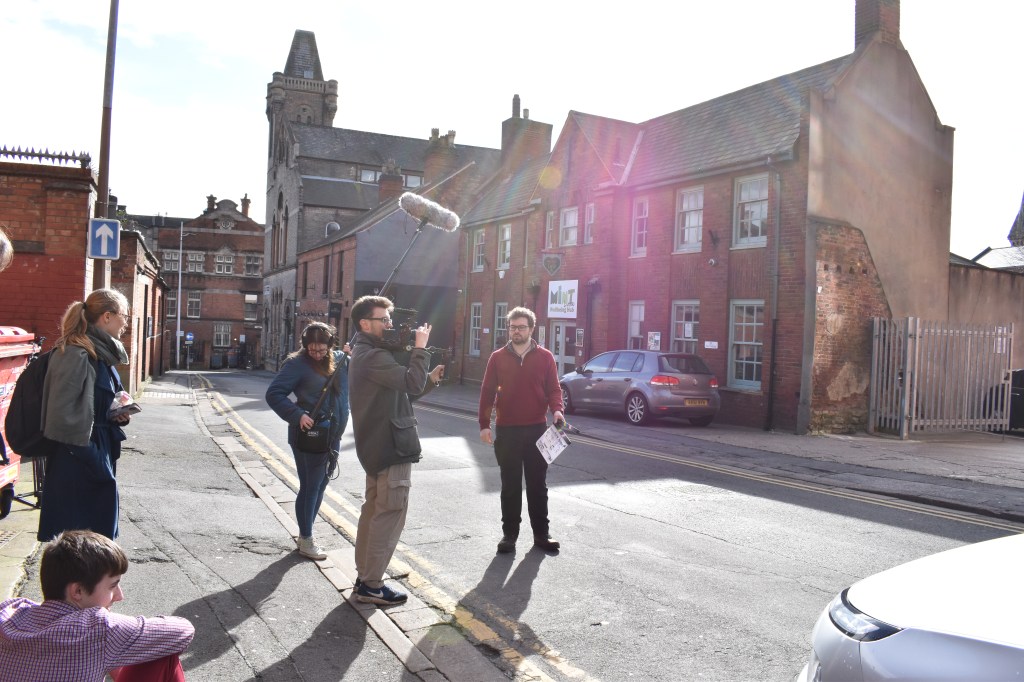
    Filming took place around Lincoln. Credit: Jemma Gray

    However, learn as much as you can in your own strength, remembering to refill that strength as to avoid burnout.

    And finally, keep going! Yes, there will be trials (plus at least one on-set disaster) but resilience will pay off.

    Your determination is your weapon. So, say yes to as many opportunities as possible. The phrase “your degree is what you make it” is good and well, but I’d take it a step further: life is what you make it.

    So “Go for it,” I say, “and direct it, too.”