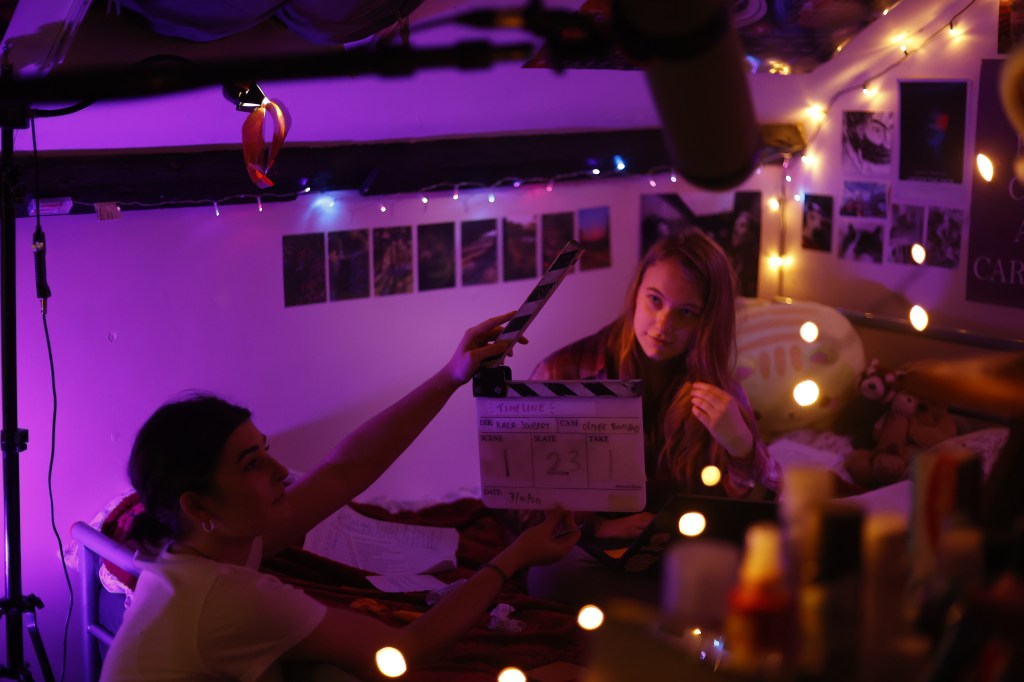
Tag: News

  • Directing, Writing and Acting in a Short Film: My Journey with ‘Time Line’

    Directing, Writing and Acting in a Short Film: My Journey with ‘Time Line’

    “This is the time Line, when can I direct your call?”

    I wrote the script for Time Line under creative boundaries. It was going to have a short running time, a small cast, and only a few locations. The theme was “time” and it was something I wanted to laugh at.

    I never expected to write another script in 2024. I thought one was enough. I intended to take a break and focus on my journalism studies. Until one of the filmmaking lecturers asked me the question:

    “Are you sure? It could be fun.”

    Well, the simplicity was nice while it lasted.

    I jest. The quiet was very boring and I was happy to be persuaded to work on another film again. I wrote the first messy draft in an hour or two and christened it “Time Line”.

    “Time Line” had a deadline and that was December. I was going abroad shortly after that, and most students (and crew) would be leaving for the Christmas holidays after the second weekend into December. That was three months away: a little less than my first short film’s deadline.

    But I had something that past me did not have before:

    The headache-inducing, tear-jerking, stress-soaked experience of making a short film for the first time.

    I was seasoned (lightly salted, more like). But I had some experience under my belt thanks to my previous film, and I intended to use it wisely.

    Step one: find money and a crew

    Regarding money, I had none. This contrasted with my previous film, which was luckily grant-funded.

    Crew were much easier to come by. I could reach out to people I met through Petalled Apologies. The legendary cinematographer Oliver Townsend was involved, but we still didn’t have a full crew.
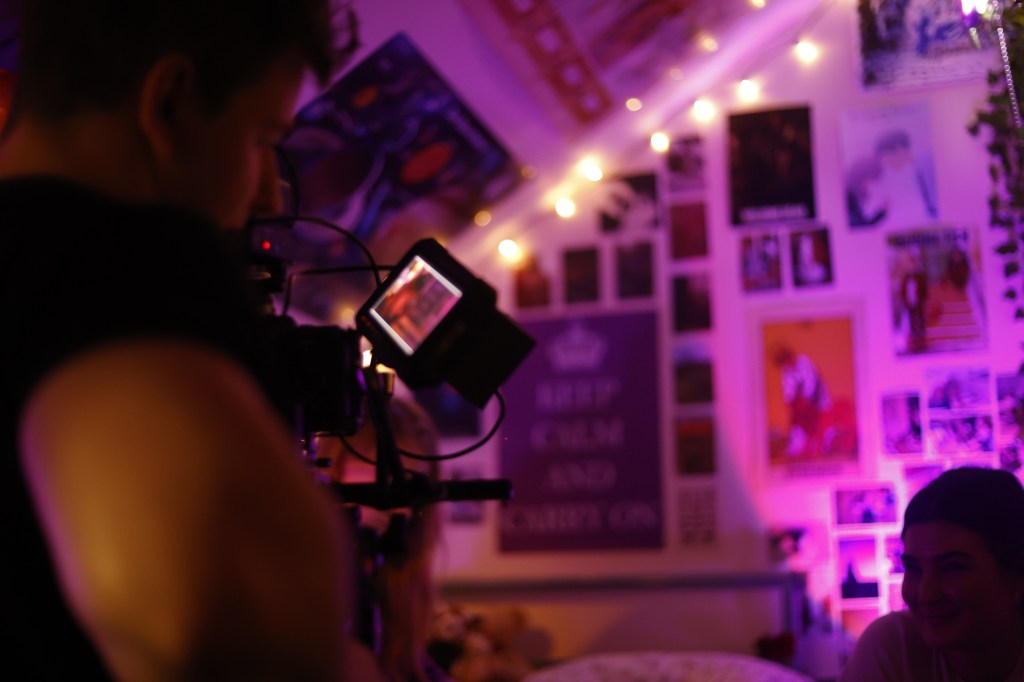
    Step one was not fully achievable on my own, so I needed to enact step two.

    Step two: find someone who can find money and a crew

    The role of a producer is not something to take lightly. In a nutshell, they produce a film. But that means a lot more than one word. They produce money, crew, cast, locations, schedules, and signatures for paperwork. That’s a lot to produce if you are just one person.

    So I would recommend getting more than one producer.

    In the end, there were probably three of us.

    But every one of us had our roles and responsibilities, and I can not thank the other producers enough. M Carter organised the paperwork side of things and enlisted some of the crew. Meanwhile, Maddie Oastler helped to organise the bake sale and helped M. She also stepped in as the assistant director on the day of shooting.

    Together, we raised around £200.

    Step three: locations and cast

    We needed two locations and two actors.

    Sounds straightforward, right?

    I thought so too.

    For the office, I adventured into the city to try to find places willing to have us film there. We found gold with one location, but they could not let us film on a weekend.

    Eventually, I asked the university if we could film on the premises. They said yes, but we still needed a student’s room for “Kate’s” scenes.

    I took to social media and asked for anyone willing to allow us to film in their accommodation. A student got back to me and gave us permission to film in her room.

    M Carter organised the schedule, which meant we had a time and place to film.

    Admittedly, we waited a little late before finding a cast. That wasn’t anyone’s fault. We used the platform mandy.com to find applicants but ran into an issue with the account and so had no cast a week before shooting.

    I managed to persuade a friend and colleague to take on the role as Time Line Operator.
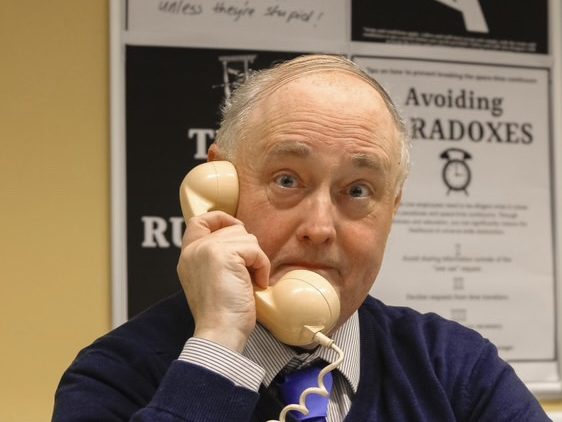
    Alex Lewczuk harnessing his inner “Time Line Operator”

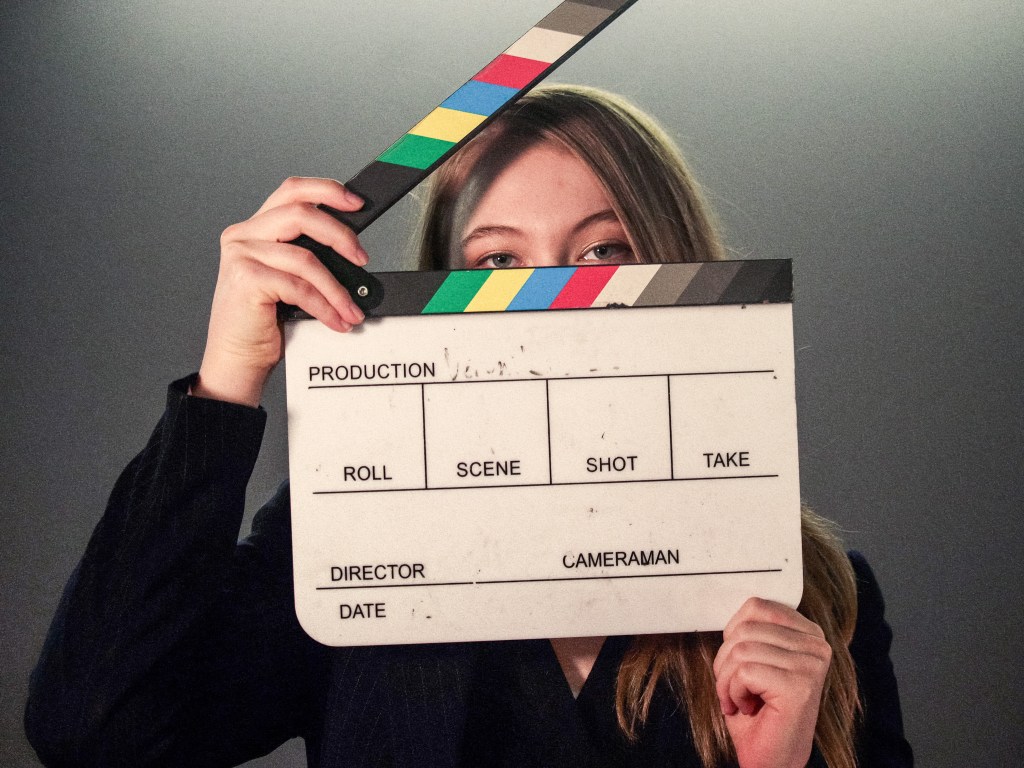
    …and I was about to make my debut as an actress.

    Step four: go with your gut

    Confession time: unless you class primary school plays such as A Midsummer Night’s Dream and my Munchkin performance from the Wizard of Oz as “acting”, I had never acted before.

    For a while after considering myself as “Kate”, I sat in a state of disbelief. I alternated between knowing I was capable of portraying her and doubting that fact.

    There were a few last-minute alternatives, but nothing gave me peace. It was partly the last-minuteness of it, and partly the fact that I knew I could do it. I had to listen to my gut.

    As an autistic woman, I have learned to mask efficiently. Nobody can really generalise something like autism, but I think a lot of autistic people in social environments and workplaces have to adapt to become acutely aware of their face, body language and tone.

    In essence, I had not acted before. However, I know what it means to measure body language. This would feel a bit like that, but taken to an extreme.

    Step five: doubt your gut (optional)

    I think most people taking on large projects at some point ask themselves: “What on Earth am I doing?”

    Several answers can flood in all at once:

    “Doing something great.”

    “Doing something crazy.”

    “Making a fool of yourself.”

    There was a brief time when I was surrounded by people who would show no hesitation in telling me that. “Stupid, irrational, silly and weird” are childish words, but they can linger in one’s mind if you let them.

    Thankfully, I have good people surrounding me who are really encouraging. This is an important element of taking on a big project: a great support system.

    You can only go so far as one person.

    Step six: fear and embarrassment are hurdles you have to jump.

    I have never been drunk a day in my life.

    I have only observed drunkenness from a distance thinking: “Thank goodness I never need to know what that feels like!”
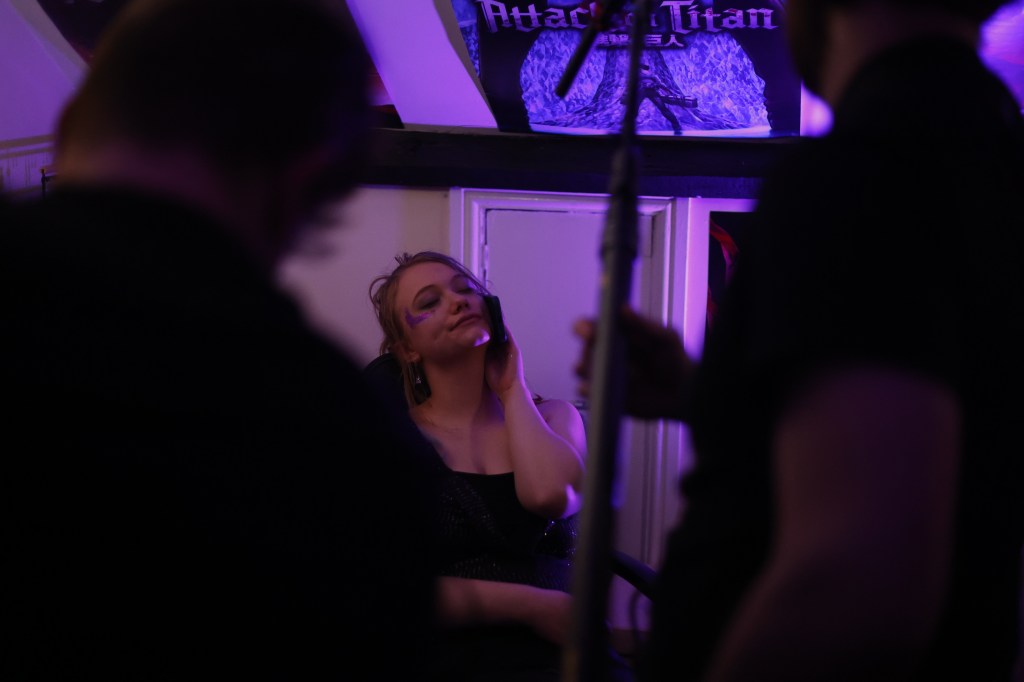
    But Kate, my character, does. She gets really tipsy after a night out. I wrote it as such and now I had to act it.

    If I let myself think about all the ways I could embarrass myself, I would never have done it. If I let myself feel any fear, then it would have shown. I was the director as well as lead actress. Being a leader, any fear from my end might have impacted the crew as well.

    So, I had to jump it. Give up my right to feel afraid. Let myself feel only a little, so I can ride the wave of anxiety as opposed to being drowned by it. After all, fear mixed with excitement is a great alternative to caffeine.

    With embarrassment, I have found that it is something to be embraced. It’s bound to be a part of life. If I avoided embarrassment while acting, I figured I would only embarrass myself more.

    So I dove straight into it. Slurred speech, messy hair, fake vomit and all.

    True, I made some mistakes at first. As the writer of the script, I had no excuse to forget my lines!

    However, I managed to strike a balance between my pre-prepared director’s notes, experimenting on the spot and self-critiquing. In the end, it actually ended up being quite fun!
    In fact, I would happily act again.

    Step seven: celebrate the victories

    This step is an important one. Anyone taking on a big project is likely a busy person overall, so taking the time to breathe is just as important as finding the time to be productive.

    After filming Time Line, everyone had a Christmas off before reconvening back for the post-production stage. That included myself, which was perfect, as it gave me the time to get prepared to study abroad.

    Now I am writing from Brisbane, Australia. Being involved in post-production from halfway around the planet is a funny thing. Thankfully, I managed to sit with the editor, Finlay Dodd, before leaving. However, there is still plenty to do before Time Line can make its film festival debut.

    Stay tuned to find out how it goes.

  • Opinion: Trump and Musk, the “crypto influencers”

    Opinion: Trump and Musk, the “crypto influencers”

    There is a lot of discussion to be had over the value of cryptocurrencies in the modern world. It is a notoriously volatile market, and like any gamble, it can give as much as it can take away.

    Yet, if you are someone with influence, you can create your own odds. This is what individuals like the American president-to-be or Elon Musk have done in the last few weeks.

    These “crypto influencers” have generated interest in certain currencies. A recent example is the meme-inspired cryptocurrency, $Trump, unsurprisingly owned by Donald Trump.

    If someone invests in something in which they are directly involved, they can foresee its value. They have the capacity to increase its value by promoting it on their own platforms. This influence can make them a billionaire overnight.

    Politicians and figures of power have always been able to influence the markets. Their platform is bigger and louder than most. But what happens if they are using that platform for their own financial gain?

    As many of Trump’s supporters might say, this makes him a good businessman. But does it make him a good world leader?

    The value of gold often fluctuates whenever Trump says something radical. But so does fear and uncertainty.

    Global economic and political uncertainty tends to create an appeal for gold, which is an internationally recognised, physical and finite currency.

    The value of gold also increases during times of war.

    At the moment, it is the highest it has ever been.

    So, I do wonder how much of “Trump’s Talk” is led with a financial agenda, and how much he and Elon Musk are benefiting from the frenzy they are contributing to in the world of finances.

    In the stock market, a single statement (true or not, acted upon or not) has the potential to make a big difference in the value of something.

    I am not a political nor a financial expert, but Trump and Musk’s trend of behaviour, alongside the value of gold and the crypto they are involved in, does suggest that a current priority for them is in increasing their capital.

    Which begs the question, will that still be the case after tomorrow’s inauguration?

    There is a lot of discussion to be had over what happens next in America. It is a notoriously volatile subject, and like any gamble, nobody truly knows what will follow.

  • Review: Lincoln Jazz Festival & the James Taylor Quartet ★★★☆☆

    Review: Lincoln Jazz Festival & the James Taylor Quartet ★★★☆☆

    Did I enjoy or did I persevere?

    Before I answer the above question, I will say this: it was an interesting jazz experience.

    Everyone has their own jazz opinion, ranging from the humble to not-so-humble. Take for example, Ryan Gosling’s performance in La La Land as Sebastian, who romanticized traditional jazz and jabbed at the gentle forms that play in elevators and cocktail bars.

    As an enthusiast of gentle jazz and Astrud Gilberto’s often-called “elevator music”, I would need to have a word with him regarding that.

    But I doubt Sebastian would have listened. He loved chaos and excitement as a musical medium.

    With that in mind, I am not sure how he would have reacted to this event. On the one hand, it was adventurous, different, chaotic, and energized. He would have appreciated this. But on the other hand, it felt less like funky jazz and more like jazzy funk. Certainly, core jazz lovers might have needed a while for their ears to adapt to the music being played.

    To fans of the Starsky and Hutch soundtrack from the 1970s, this combo works well. Several songs sounded like something that would play in a detective’s montage scene, with dusty cigars and trench coats galore. To others, they might argue that the combination of jazz + funk = junk.

    Certainly, the organ was the core instrument throughout the evening. Unfortunately, this overpowered the rest of the instruments even if it did provide an interesting take on “jazz” itself. For that reason, I would say this both subtracted from and added to the experience.

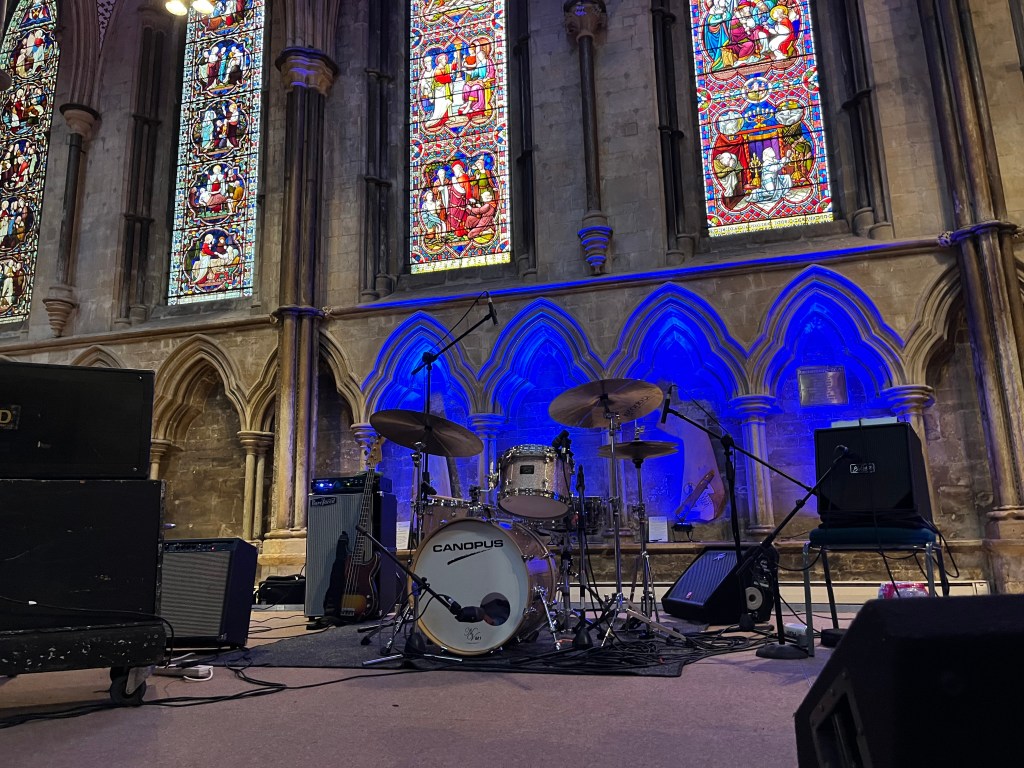
    But with religious glass paintings and the gothic structure, it seemed fitting that an organ would be part of the musical ensemble.

    Some of the music performed seemed more like funk than jazz.

    The venue was unsurprisingly stunning, albeit an interesting choice. Like the organ, the Lincoln Cathedral comes with both its disadvantages and advantages, depending on where you sit.

    When I attended the London Film and TV Orchestra’s performance in the Lincoln Cathedral, the musicians were placed central to the venue. Like a small army, equipped with strings, trumpets, and more, they faced the long hall of the building, and their sound carried far with minimum reverberation and echoes from the walls. It did not matter where you were in the audience because the sound carried well.

    However, the James Taylor Quartet were placed against a wall, not facing the long hall, but facing another wall, which was directly behind the audience.

    The chairs were semi-circled around the stage. I sat center and back, close to the musicians in front and even closer to the wall behind me, and felt as the loud sound waves traveled through me, bounced from the stone walls behind, and zig-zagged in my ear canal.

    It was difficult to not get overwhelmed as the music pierced you at least two times over. I don’t think that speakers were completely necessary, and my drink agreed as I felt the liquid inside the can vibrate, as if a dinosaur from Jurassic Park were on its way.

    Another one of the disadvantages to the Lincoln Cathedral is it is often too cold to enjoy sitting in one place for too long, but thankfully that evening was warm and those stone walls served as a welcome fridge.

    There were drinks and snacks available, which certainly one-upped the London Film and TV Orchestra evening, in which no drinks or snacks were provided.

    Another area where the James Taylor Quartet won was in the audience engagement. James Taylor himself was something of a comedian. Not to the point where he became a key element of the evening, but he knew how to keep his audience feeling useful and entertained. People clapped their hands, danced, and sang.

    A clip of the event. The evening ended on a karaoke-meets-town-hall-disco party note.

    However, the variety of the music was a little stiff, and considering the general age demographic of the people attending, so were the dancing moves.

    Now, in answer to my question, I did both persevere and enjoy the evening.

    The experience of live music is always a fun one, and perhaps it is never truly comfortable. Maybe it should not be, in favor of La La Land Sebastian’s views.

    But if The Girl from Ipanema or more jazzy genres were performed that night, I would have enjoyed the performance little more and needed to persevere a little less.

    But that’s just my humble jazz opinion.

  • Review: Batman (1966): A Fun and Light Slapstick Movie for Kids and the Young-at-Heart ★★★☆☆

    Review: Batman (1966): A Fun and Light Slapstick Movie for Kids and the Young-at-Heart ★★★☆☆

    Of course, to follow suit of the Batman lingo, this was a bat weird, bat film that made me question my bat sanity.

    Alongside the tight leggings, there were admittedly a lot of Dicks (of course I’m referring to the yacht captain’s reading habits and Robin’s real identity, nothing more…)

    But with the occasional random couple snogging, the instant outfit lever, and Catwoman’s need to randomly meow, I was often left asking, in a hazed state, “what was that?”

    My best guess: a slapstick movie, made to entertain the kids and make the parents ask themselves the same questions I have… Why the eyebrows on the mask? Why the shark bat-spray? Why the tight shorts?

    I can’t help but laugh at the dialogue. Like the Penguin’s facial prosthetics, it’s all a bit on the nose.

    In comparison, you can’t even consider Nolan’s and Robert Pattison’s Batman as surrounding the same character. If anything, this film was closer to The Lego Batman Movie, and with nearly as much plastic in the form of giant signs and toys to make Batman’s situation as obvious as possible for its presumably young and young-at-heart audiences.

    Minus the very sad (not really) off-screen death of a porpoise we never meet, and Batman’s punches that fall about a mile from his enemies’ faces, there is no real violence or emotional investment.

    And with the Pentagon busy playing board games, riddles in which the answer is absurdly “banana”, and lines such as “some days you just can’t get rid of a bomb…” it’s a strange mix.

    The biggest irk I had with this was the pace at which the film progresses. Now, perhaps I am not its target audience (although I’d be lying if I said I didn’t find the campness of Batman 1966 hilarious). However, I found that the stakes could have been higher (I didn’t care much for the world leaders), and the whole Kitka situation could have been condensed a bit.

    The story seemed all over the place, but maybe this was the idea?

    Either way, it was fun, it was light, and it was bat-shit crazy.

  • Opinion: why rock climbing rocks

    Opinion: why rock climbing rocks

    Don’t ask me to lift weights and expect me to enjoy it. And unless you can give me the lungs of a triathlete, you won’t find me on a treadmill.

    For me, most exercise is a chore, albeit a valid one to tend, but after studying at university and falling into the routine of wake – work – eat – work – sleep, I am generally too busy ‘working in’ to bother ‘working out’.

    But perhaps that’s more of an excuse than a reason. In truth, I find there is something so dull about taking myself away from my station, to go one-to-one with exercise machines made for people looking to complete their convenient, unaspiring fitness goals: half of which will never be fulfilled.

    Of course, you can listen to podcasts in your ears, or drum yourself into the energy of gym music in which lyrics of sex, success and break-ups blare from the gym playlist as if from a pumped DJ high on testosterone.

    But I still find it boring, and eye the gym clocks the moment I walk in.

    Now, if you’re a gym person then I won’t hold it against you. In fact, I recognise gym is a core element of many people’s lives for mental, physical and social wellbeing, and I salute those for their determination to get out of bed and intentionally cause discomfort on their bodies in this controlled environment.

    They will probably beat me at any arm wrestle, too.

    But here is the thing: nothing beats swimming and rock climbing.

    Why? Because if you stop swimming, you drown. And if you stop climbing a climbing wall… well, with the right safety equipment, you would be fine, but nobody wants to scare themselves by falling!

    Maybe I have a slight obsession with the sensation of soaring. Floating in the water, you feel weightless. High on a wall, you feel boundless. Running on a treadmill, I feel like a hamster in its wheel, stuck in the same place and going nowhere.

    Now, I am no adrenaline junkie but when it comes to climbing and swimming, I like the thrill.

    Getting into a pool, the first thing I feel is the cold. It’s uncomfortable, but I respect it as the medium on which I will float. Kicking off the edge of the pool, it’s as though I am kicking away the burdens of the day – moving, swimming, breathing, holding my breath – I don’t have the time to look at my problems, except to acknowledge they don’t exist in the water.  

    It’s difficult not to get caught in the symbolism of a physical challenge. Whether it is going to the gym, swimming, or climbing a wall, it is easy to think of the people that said you would never succeed, in life, studies and business, and then move through the pain as if with the resilience of someone saying, “watch me”.

    Rock climbing feels like that. It’s scary, sure. But there is no better time to feel so big and yet so vulnerable as when you have climbed a wall and look down to see how far you have come. The adrenaline, mixed with the strain on your shoulders, arms and hands is an intoxicating mix. It is very difficult not to feel a sense of accomplishment afterwards.

    That’s why I say these activities beat all.

    There is no high horse for me to sit on, and I won’t pretend it. This is an opinion piece, after all. Yes, these activities seem to align more with the primal instincts around exercise, and for that reason could be seen as “exercise with a purpose”.

    However, in the modern age, most of us don’t dangle from cliffs, chase after our food and commute across rivers. At least not in our daily routines. And with harnesses, running shoes and swimming pools, it’s not as if these activities bear any resemblance to cave-time activities.

    Similarly, with gym, few of us have a real reason to run anywhere, or to strengthen our glutes, except for the corresponding health benefits, which are very important.

    Let me be clear: I am not saying don’t go to gym. There are plenty of reasons why exercise is important, and I have already outlined a few. If gym is the best way to get it, then by all means: charge ahead!

    But if you’re like me, a guilty party of unused gym subscriptions, I would make a recommendation: find the sport that feels like a treat to do, and then do it whenever and wherever you can.

    There is a reason why so many gym goals never get fulfilled. Going to work out can be a difficult thing to commit to, especially for those with lots of business, home and personal responsibilities.

    But it’s much easier to put aside those daily tasks if you know you’re going to have a fun time doing something else.

    Rock climbing can be quite expensive, and as someone who cannot yet drive herself to the local swimming pool, I don’t go as much as I would like.

    But if I had my own swimming pool or wall to climb at home, well let’s just say, I would probably be the one beating you at an arm wrestle.

  • Radio: the last ever Midweek Drive on Siren

    Radio: the last ever Midweek Drive on Siren

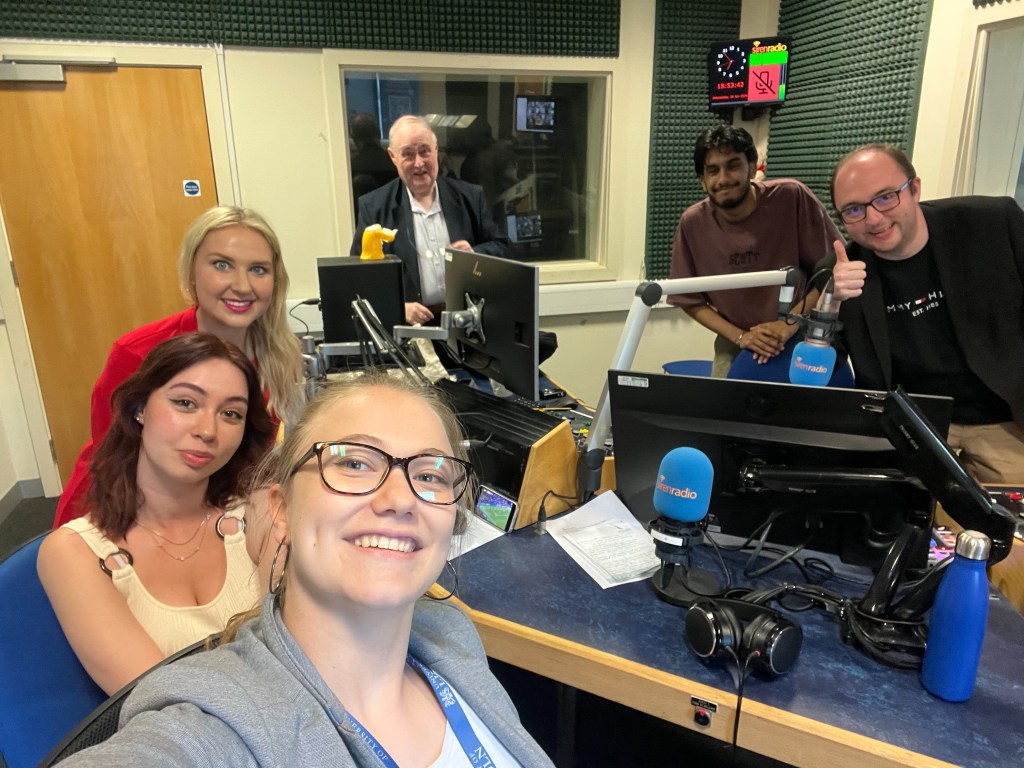
    The last Midweek Live Drive from the Siren studio before its closure and licence transfer.

    With 24 souls bravely covering topics, including Ed Sheeran’s to-be tour chef Stacy Leith, Newark Book Festival’s Jack Cornish, Doctor Who discussions with Alan Steven, Authors Jennie Fincg and William Coles, as well as Jessica Burtis, Tosin Soyemi, singers Chloey Rose and Victoria Simmonds, Doctor Who director Graeme Harper, Phil Hurd-Wood, royal commentator and arts critic Richard Fitzwilliams, Lily Holleman, Tessa Snart, Keith Taynton, Gabrella Peralta, Ciara Mullins, Cathy Manso, Ben Lewis, Fia Van Den Bogart, Jodie Harrison, Meryn Hobson, Ana Cosconel, Kara Joubert and Alex Lewczuk.


    More on Southside Broadcasting

    Listen to the latest:

    TMD ONLINE Wed Dec 31st 2025 southsidebroadcasting

    Elly Sample, Kara Joubert, Victoria Simmonds, Ana Cosconel, Jonathan Linsley, Cathy Manso, Sarah Huntley & Alex Lewczuk with approx 90 mins of audio entertainment to wrap up 2025 AD
    1. TMD ONLINE Wed Dec 31st 2025
    2. FMTTM The Podcast Mid-Season thoughts
    3. Lorin Krenn `Love , Relationships and Awakening`
    4. Resonance Rewind Ep 283 `Casino Royale`
    5. Tricia Copeland, Lynda Williams, Patrick Sangimino, Publishing thoughts and avoiding phone scams
  • How I made a movie

    How I made a movie

    To start at the beginning would take too long, but I would say it all began with an insomniac 7-year-old, lying awake in bed, creating imaginary sequels and spin-offs in her head.

    Thankfully, my appreciation for storytelling has since branched into different mediums of writing, from scripts to stories to journalism. It was the journalism course that led me to the University of Lincoln. It seemed the pragmatic choice, but has opened many exciting doors.

    The phrase “your degree is what you make it” rings particularly true in media.

    Many think that in order to get from A to B, you need to follow a particular path. I would say that unless you’re looking to become a doctor or lawyer your degree doesn’t have to define your career. In the creative fields, you have more flexibility to create your own opportunities.

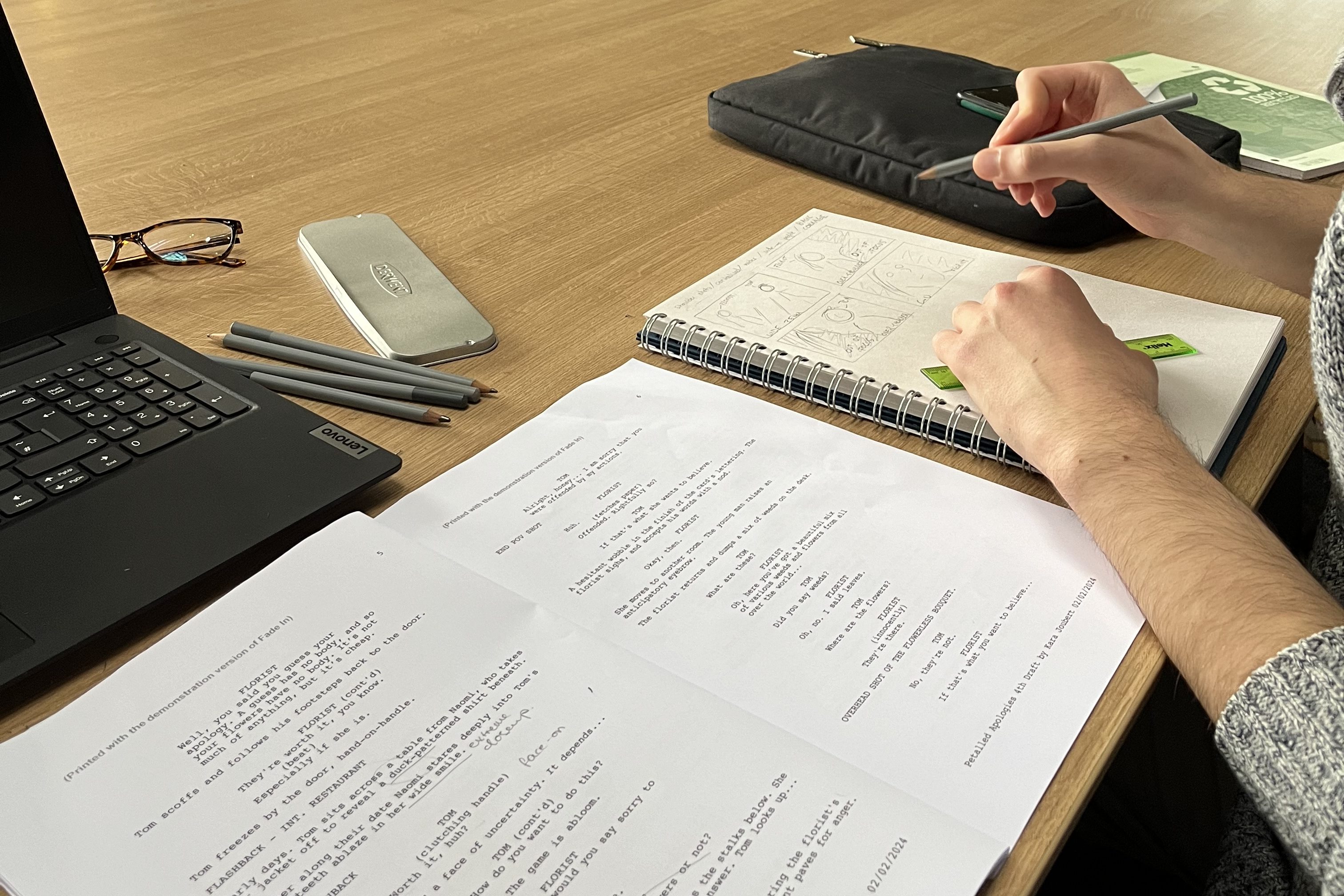
    Rachel Scarrott’s filmmaking group was one of those opportunities.

    Starting university, I made a promise to take any filmmaking and screenwriting opportunity that came my way.

    I recall the moment I pitched my short story as a script idea. Back then, my voice shook whenever I felt nervous. It felt like a stab in the dark. I didn’t know what I was doing, I just knew what I wanted to do.

    “Go for it,” she said, “and direct it, too.”

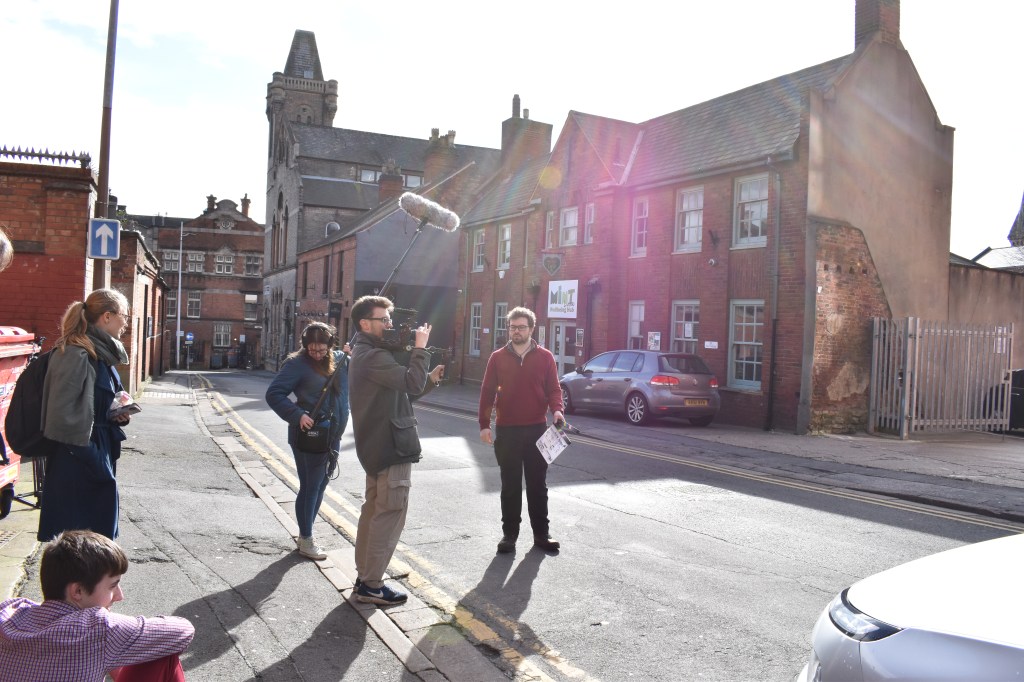
    Filming took place over three days. Credit: Jemma Gray

    So, with money from the University of Lincoln’s Student Initiative Fund, that’s exactly what I did. 

    Still, moving from pitch to production was a mission. For a start, I did not know students in the film department. Nor did I know much about directing, nor filmmaking for that matter.

    I just knew how to write a script. Mostly.

    So, I asked around. One contact led to the next and soon enough, we had a crew. That included James Learoyd, who, along with “Directing for Dummies,” showed me the ropes.

    Post-production was a lengthy experience. In addition to communicating between a team of students, the script was evolving, and time was being spent to align everything so when we were shooting, we hit our targets.

    Storyboarding with James Learyod. Credit: Kara Joubert

    Of course, that all took place alongside my studies. The balance was easy enough to maintain, although that meant sacrificing a lot of free time. Many people advocate for the “classic” university experience (although not as many as you may think) and that includes raves, parties, drinking and sex.

    To put bluntly, I had other things to do – sorry, Bumble.

    Lots was learnt in a short period of time. With extracurricular filmmaking alongside my journalism studies, it felt like educational whiplash. But working on the film never felt like a chore. It felt like a dream. 

    Shooting itself was a highlight. By the end of each long day, the team achieved something remarkable.

    The actors were so focused on their performances. Working with them was a delight. They made my first directing experience a positive one, and I would happily do it again.

    Today, Petalled Apologies is still in post-production. This has taken longer than expected, mostly due to everyone’s deadlines for assessments. 

    But I can’t wait to show you.

    Overall, creating the short film Petalled Apologies has been a dance-inducing, caffeinated, stressful, fun experience. I have no alternative but to thank everyone for allowing me to have that.

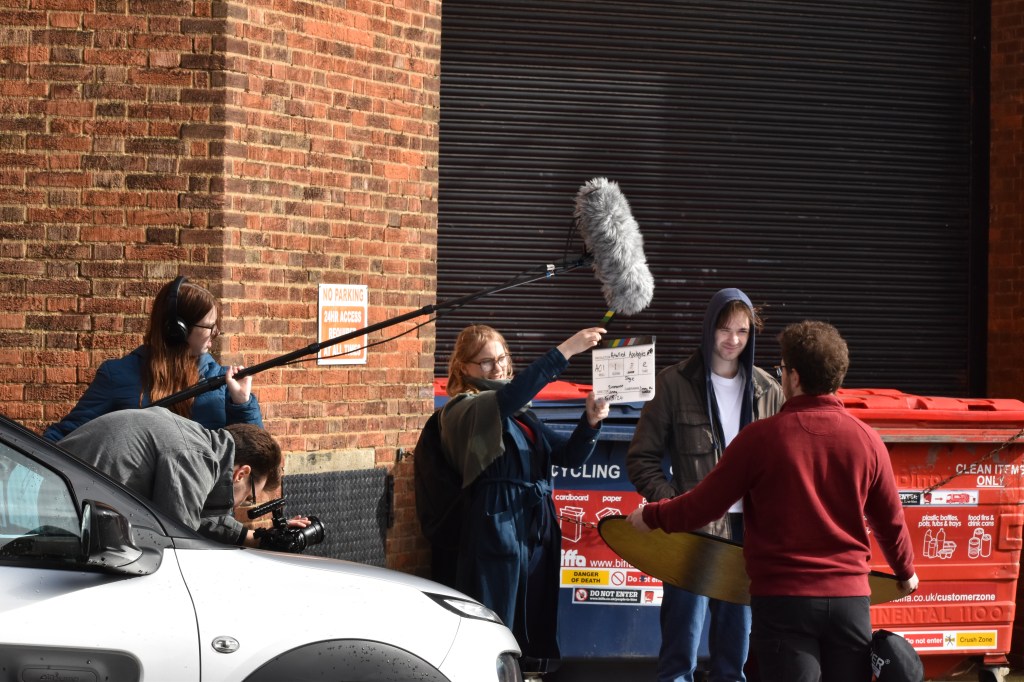
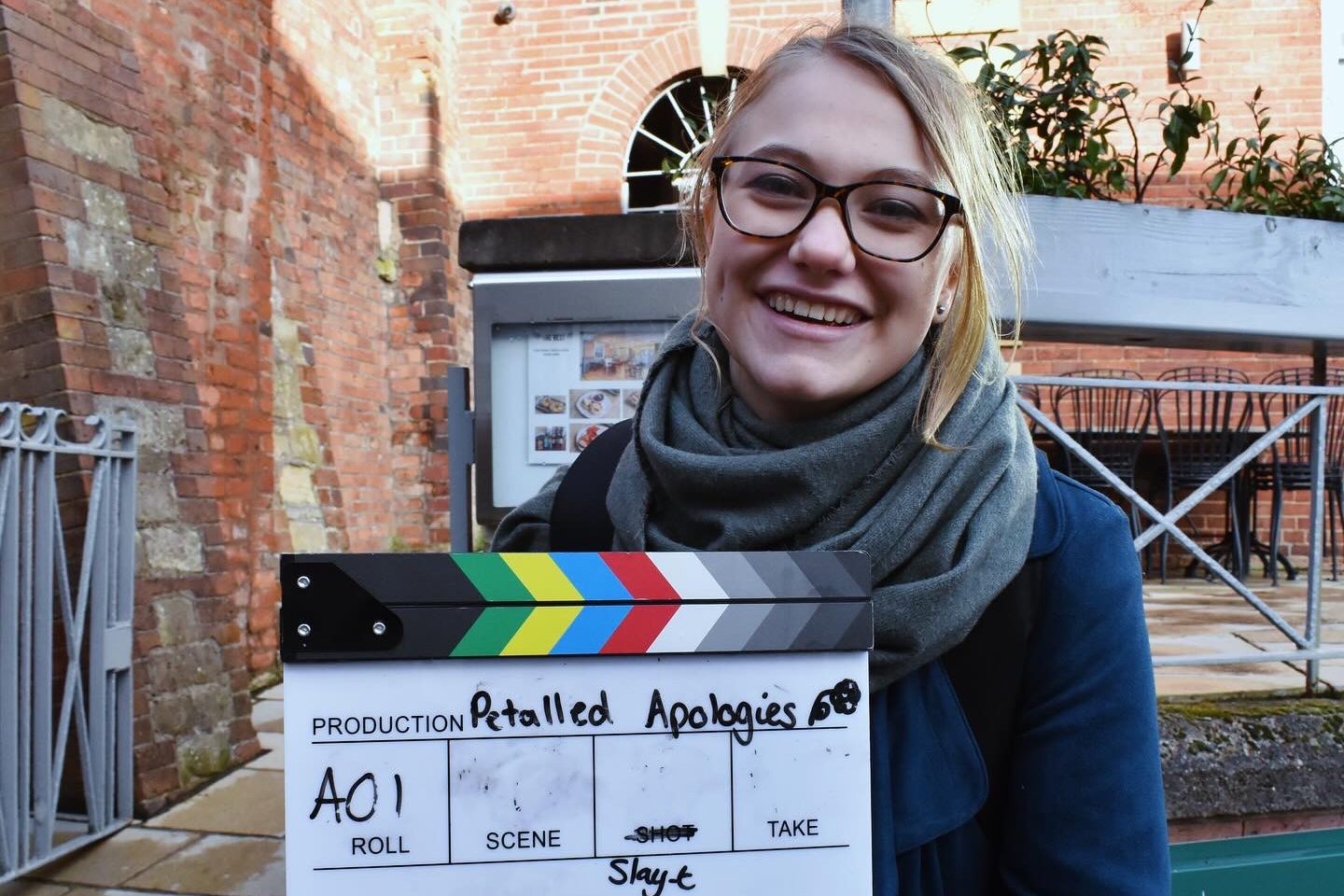
    The crew “slayed” during production, despite a tight schedule. Credit: Jemma Gray

    So, if you’re asking yourself: “how do I make a movie?”

    Opportunities do exist. Look around. And then ask around. You’d be surprised how quickly one contact can turn into three. Being friendly and confident helps. Initially, I was terrified talking to people. However, my voice grew stronger during work experience.

    “Work” for a lot of young British people means manning the tills at Tesco or the local charity shop. I was no different. It might not be the most exciting experience, but value this as an opportunity to exercise your social skills.

    Your social skills, or at least, enthusiasm, can get you far. Speaking to people in-person is always more successful than over email. Talk to your peers, lecturers, industry professionals, the friends of friends…

    But be selective about who you hold onto. Only invest in people who are decent and good at what they do. And remember, you can conscript anyone into helping you create a film, but you can’t force enthusiasm.

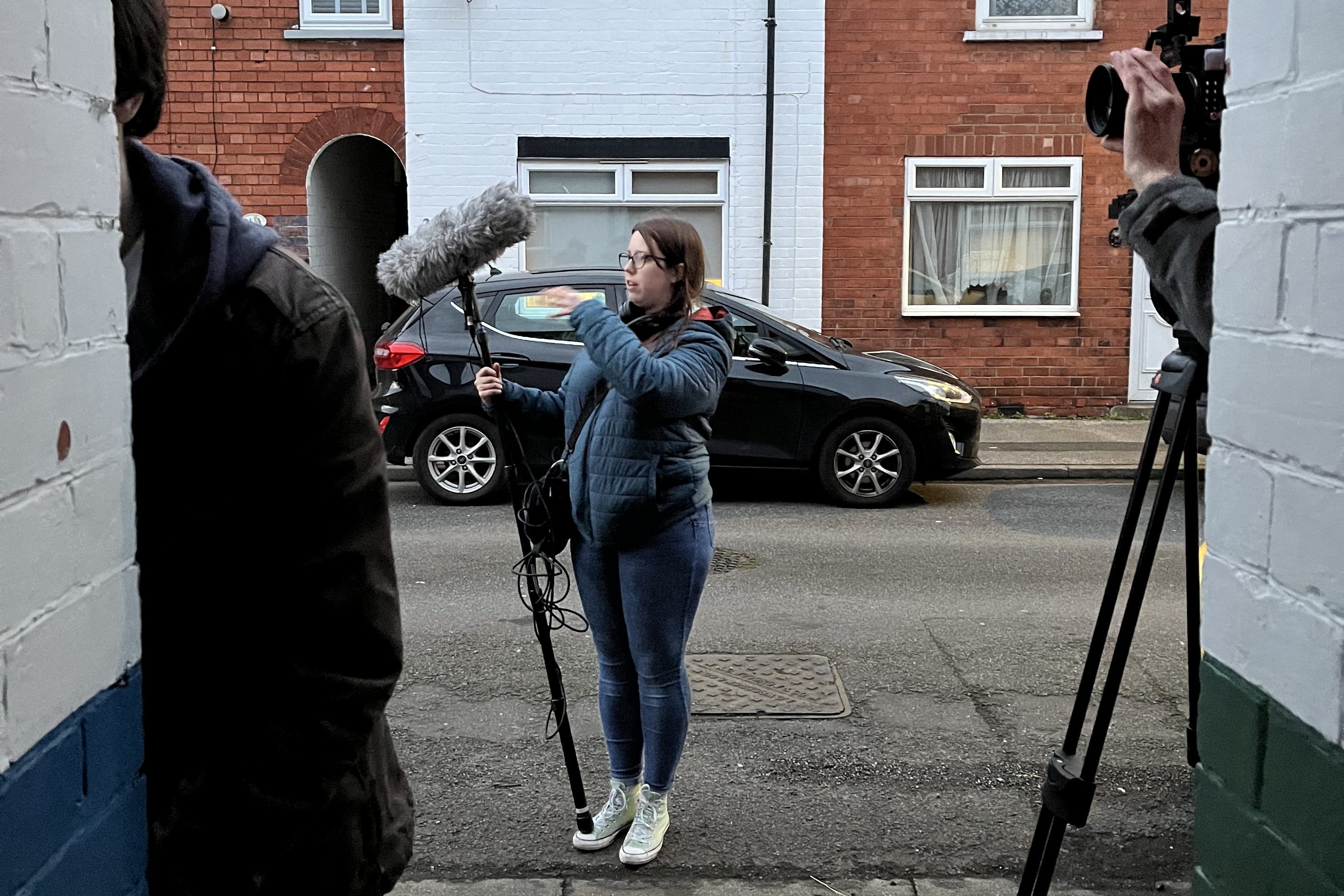
    Most crew members such as Ellie Nielson had several roles. Credit: Kara Joubert

    Apathy is a project killer. So, when gathering a crew, I’d suggest either finding people who are excited about your film and indifferent about their job, or people who are indifferent about your film and excited about their job. Ideally, find individuals who are excited about both.

    Sometimes you can’t choose who you work with, so diplomacy and a strong footing might be needed when collaborating with certain individuals.

    Expect everything to take longer, but hold people accountable to their own deadlines – including yourself.

    Deadlines are important things to consider when looking for funding. Sometimes you can gather a crew and then start crowdfunding. However, you might be lucky enough to secure funding before having a crew. That also says to people that you’re serious about the matter, which encourages crew members to join.

    Remember, most money is spent in production and post-production.

    • Pre-production (planning to film)

    • Production (filming)

    • Post-production (everything after)

    Finding funding was easy for me, but only because I could speak with the filmmaking lecturers of the University of Lincoln. On top of that, we began a crowdfunder. But if you don’t have access to these sorts of contacts, you might need to be more creative with this.

    Google helps. There are lots of grants and competitions around. You can also look for individuals and companies to sponsor your film, and offer executive producer roles in return.

    Don’t be afraid to say you don’t know what you’re doing, but choose who you go to for advice. For me, that was James. Finding people who share your vision means that you can troubleshoot ideas with people who care.

    Filming took place around Lincoln. Credit: Jemma Gray

    However, learn as much as you can in your own strength, remembering to refill that strength as to avoid burnout.

    And finally, keep going! Yes, there will be trials (plus at least one on-set disaster) but resilience will pay off.

    Your determination is your weapon. So, say yes to as many opportunities as possible. The phrase “your degree is what you make it” is good and well, but I’d take it a step further: life is what you make it.

    So “Go for it,” I say, “and direct it, too.”

  • Watch: substantial concern over nuclear waste dump proposal

    Watch: substantial concern over nuclear waste dump proposal

    A carbon capture scheme has been proposed for the rural town of Theddlethorpe, Lincolnshire, unsettling residents. Some have declared that they would look to move should it be built. Kara Joubert spoke with a couple who live near the proposed site.

    Stay tuned as there is more to be written on this subject as the situation changes and develops.

  • University of Lincoln addresses £30 million deficit in student meeting

    University of Lincoln addresses £30 million deficit in student meeting

    Read the UCU (University and Colleges Union) criticising the university.

    A student-staff meeting regarding the University of Lincoln’s financial stress was called earlier this month.  The University, which is currently in a 30-million-pound deficit, held an online meeting with students on May 1st to answer questions and concerns about the current situation.  

    The Student Union (SU) accommodated the meeting, which management praised for its “fantastic student rep system.” The management team started the meeting by saying, “Students’ opinions matter to us.” In this spirit, students posed several questions through a chat system. The SU selected only a handful to pass on to management.  

    There were some optimistic statements from management as they sought to justify several of the changes ahead. These changes include cutting open hours for several University buildings, merging schools, and increasing the accommodation costs.   

    Management clarified that the rise in accommodation is not directly related to the University’s financial situation. There were assurances that the financial difficulties would soon be over. Professor Abigail Woods said: “When everyone returns in September, we’re starting afresh. 

    “It’s building back better so we can come back with a renewed spirit of optimism, and we can try to put all of these last difficult few months behind us. 

    “It’s difficult for us to predict what might be coming around the corner. There’s a lot of not knowing, and we can’t give certainty because we don’t have that ourselves.”  

    When asked if any teaching would move online to cut costs, Prof Gyles Lingwood said: “We’ve got no plans to push our students away from the campus because of the situation we are in at the moment.” 

    Cuts to staff were not ruled out. Each department has a baseline of savings they must reach, and schools are expected to find ways of achieving this, including redundancies. In schools with a higher staff-to-student ratio, redundancies were described as more likely.  

    In the meeting, management said that they intend to minimise the impact these cuts could have on students. However, on the University and College Union’s (UCU) website, the UCU Lincoln acting chair Dr Rob Dean said:  “It is simply impossible to slash so many jobs without severely impacting current students, future students and diminishing the University’s vital role as a cornerstone of regional education.” 

    The University is currently suffering a £30m funding shortfall and expects to make 220 staff redundant. According to the University, much of the fault for this situation “has come from outside the University”. However, in a BBC article, the UCU blamed management for the 30-million-pound deficit. 

    After being approached for a comment, a University of Lincoln spokesperson said: “Universities across the country are being placed under financial pressure by the ongoing freeze in UK undergraduate tuition fees and recent immigration policy changes which are deterring international students.” 

    With this shortfall, they stated that “almost half of UK universities are forecasting deficits this year”. As a result of this, the University opened its voluntary redundancy and severance scheme. 

    The current situation contrasts with the University’s 2022-23 financial statement, which said the University remained “financially sustainable for the whole forecast period, with sufficient available cash balances”. 

    It also noted “extensive financial modelling and scenario planning to ensure that its financial position is not compromised”.  

    Figures from the financial statement showed that in 2023, the University’s total income was around £240m, a £25.2m increase from the previous year. 

    The meeting ended after around 50 minutes. Prof Woods reiterated that the University “is not on a precipice of falling over a cliff and closing down” and that further concerns and questions can be emailed to management. 

  • Financial climate fosters lack of carers in Lincolnshire

    Financial climate fosters lack of carers in Lincolnshire

    A foster carer has shared her story fostering in Lincolnshire, where the council has announced a shortage of people in the field.

    Helen Eedle, 43, has been fostering for 21 years in Alvingham, Lincolnshire with her husband, John. They have supported around 140 children and has seen the foster care system in Lincolnshire evolve through the years.

    She said: “I grew up with fostering being quite a big part of my life because my auntie used to foster, and some of my best friends at church were fostered.”

    After expressing interest in fostering, the couple received a phone call from the council, asking for them to care for siblings.

    Helen is one of the few foster carers in Lincolnshire, where a deficit has been announced by the council. According to the latest Fostering Annual Report, at the end of March 2023, there were 288 foster carer households currently registered.

    When asked about the deficit, Helen said: “I think a lot of it is down to the financial climate. But a lot of other regions are offering things like, if you’re having a room for fostering then you don’t have to pay council tax or free bus passes.”

    According to the Lincolnshire County Council, payments for foster carers see an average of £181.29 per week.

    However, in a cost-of-living crisis, this might not be enough for everyone.

    “In the climate we’re in, not many people have a spare bedroom. It’s a big commitment and I know a lot of foster carers find the summer holidays very hard.

    “If you imagine how much it costs just to take your own family on holiday, and then they have extra children to find childcare for over the summer holidays, it’s another financial expectation upon yourself.”

    However, Helen calls fostering rewarding: “it’s just really awesome really to see how the kids are growing, how they’re progressing and how they’re becoming their own little character and seeing that develop. It’s just lovely.”

    Ali Williams, another foster carer in Lincolnshire agrees: “When you have that week when you introduce that forever family to them, it’s so amazing.”

    By Kara Joubert