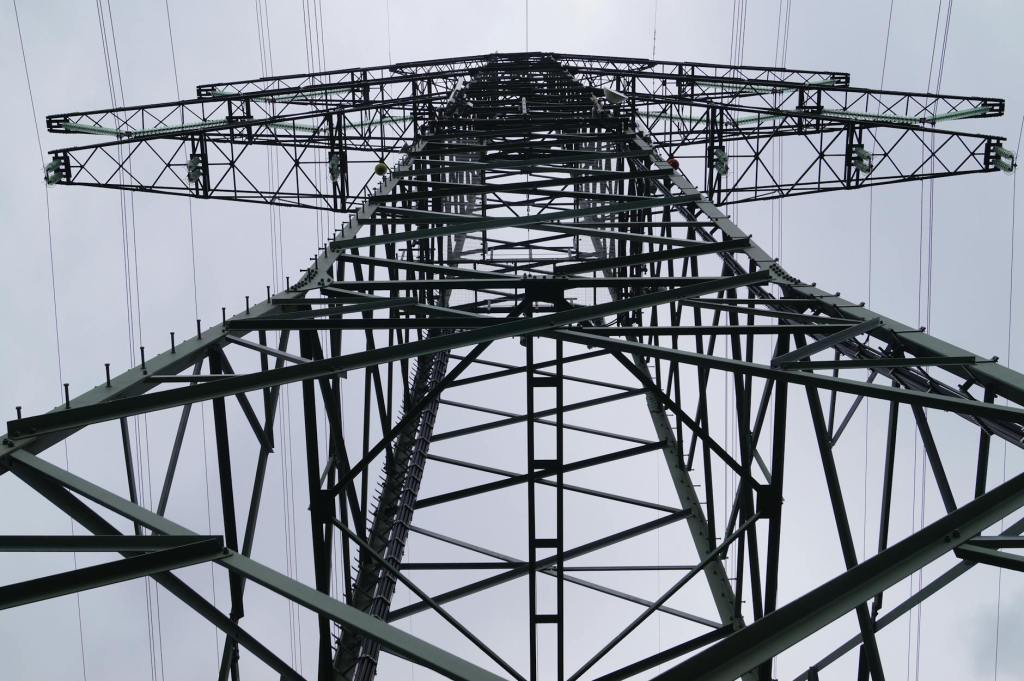
Written 12th April 2024 – before local elections.
Lincolnshire County Council has objected to the National Grid’s proposal for pylons across Lincolnshire and is calling for an independent review into the project’s costs.
Lincolnshire County Council held a meeting on March 5, 2024, to discuss several matters, including a plan to build pylons across Lincolnshire.
National Grid proposed the project to the council in January.
Many councillors attended the executive meeting to discuss this. Concern among them was high and evident, reflecting local unease.
Among those was Cllr Colin John Davie (Con, Ingoldmells Rural), the Executive Councillor for Economy and Place. He raised objections, saying: “I don’t think there is any kind of understanding by National Grid about the impact and scale of the impact that this proposal will have. Not just on people living nearby to the pylons but also on the agricultural sector the tourism sector and the harm to the character of the county.”
Cllr Davie added: “People often take a cut in money to live in the country and work in Lincolnshire because of that quality of our countryside. This will absolutely destroy quality of the countryside from Grimsby all the way down to Walpole.”
According to National Grid, approximately 140 kilometres stretching from Grimsby to Walpole would house the 50-metre-tall pylons.
Head of Planning Neil McBride raised concerns with the health risks associated with pylons. He said: “100 metre away is the safe zone from them, so that’s a 200-metre line through the countryside on either side.
“So, if you’re spending any time inside that line then you’re obviously going to be at risk from radiation and various other things from these lines.”
The pylons would impact thousands of residents across Lincolnshire, including those living in Boston, Spalding, Burgh le Marsh, Thoresby, Louth, Alford and Withern.
Separate to this meeting, I asked Cllr Travis Hesketh (Ind, Withern and Theddlethorpe) about his view of National Grid’s plan. He said: “Nobody wants pylons in their backyard, do they? I’ve met one person who likes pylons. He says he liked painting them.”
I also spoke with locals in Louth’s Waggon and Horses pub, who shared their distaste for the proposal. Alongside words of “eyesore” and “loud”, one woman told me: “We’ve worked bloody hard to live here.” As previously spoken by Cllr Davie, many people chose Lincolnshire as their home due to the unspoiled beauty and natural landscapes.
Lincolnshire is currently the subject of many large-scale projects, such as the pylons, a geological disposal facility and a carbon capture scheme, all of which have the potential to alter the landscape dramatically.
According to several sources, the infrastructure for the pylons is estimated to cost around £1bn, around four times less than the seabed option. The plan would also include the construction of several substations.
Leader of the council, Cllr Martin John Hill OBE (Con, Folkingham Rural), said: “Frankly, National Grid say it costs four times as much to put it on the seabed.
“They’re saying that would be a quarter of the cost of putting 420 50-metre-high steel pylons all the way down the coast and there they’re telling us that is actually cheaper than putting it on the seabed and really, I don’t believe them.”
After the meeting, the council published an open report stating their objections and concerns surrounding the proposal, alongside a call for an independent review.
This open report stated that: “An independent review of the proposals will enable the council to continue to make the case for a subsea alternative during further rounds of consultation and in preparation for the Council to submit its formal position on the proposal once an application has been submitted to the Planning Inspectorate (expected 2027) for a decision on the application by the relevant Secretary of State.”
Amid concerns for the historical and natural environment around the proposed line, the open report also noted that: “The Lincolnshire coast forms part of the East Atlantic Flyway and is registered as one of the seven sites in the UK on the tentative list for UNESCO World Heritage site status.”
During the meeting, Cllr Davie added: “This is the beginning of a fight and we’re going to have to fight hard if we’re going to protect Lincolnshire for future generations.”
 Kara Joubert: Writer, Journalist & Filmmaker