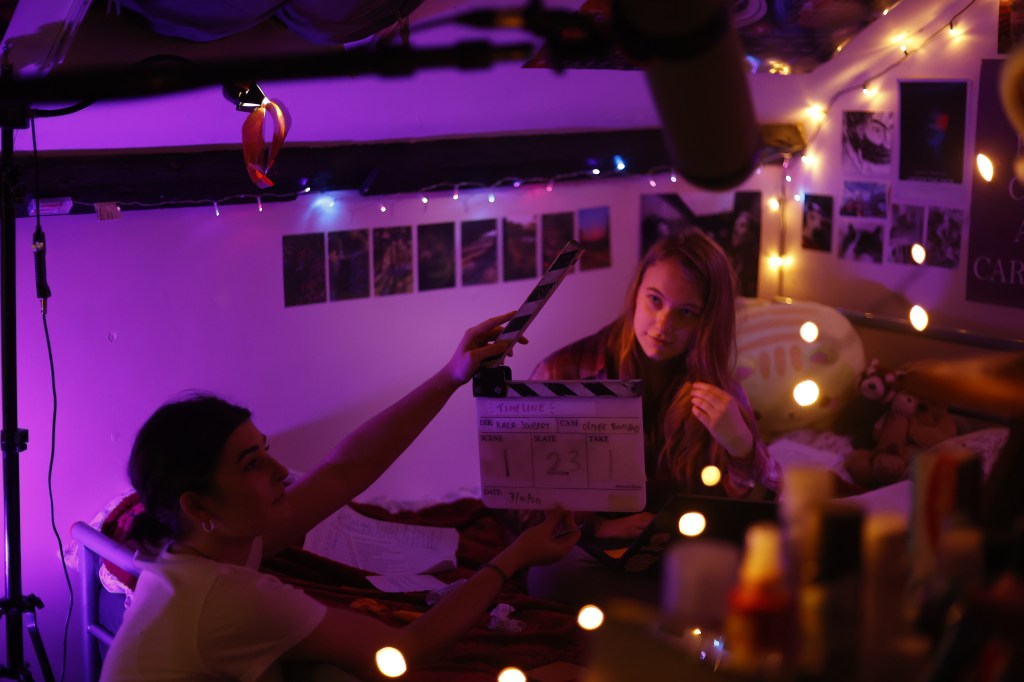
“This is the time Line, when can I direct your call?”
I wrote the script for Time Line under creative boundaries. It was going to have a short running time, a small cast, and only a few locations. The theme was “time” and it was something I wanted to laugh at.
I never expected to write another script in 2024. I thought one was enough. I intended to take a break and focus on my journalism studies. Until one of the filmmaking lecturers asked me the question:
“Are you sure? It could be fun.”

Well, the simplicity was nice while it lasted.
I jest. The quiet was very boring and I was happy to be persuaded to work on another film again. I wrote the first messy draft in an hour or two and christened it “Time Line”.
“Time Line” had a deadline and that was December. I was going abroad shortly after that, and most students (and crew) would be leaving for the Christmas holidays after the second weekend into December. That was three months away: a little less than my first short film’s deadline.
But I had something that past me did not have before:
The headache-inducing, tear-jerking, stress-soaked experience of making a short film for the first time.
I was seasoned (lightly salted, more like). But I had some experience under my belt thanks to my previous film, and I intended to use it wisely.
Step one: find money and a crew
Regarding money, I had none. This contrasted with my previous film, which was luckily grant-funded.
Crew were much easier to come by. I could reach out to people I met through Petalled Apologies. The legendary cinematographer Oliver Townsend was involved, but we still didn’t have a full crew.
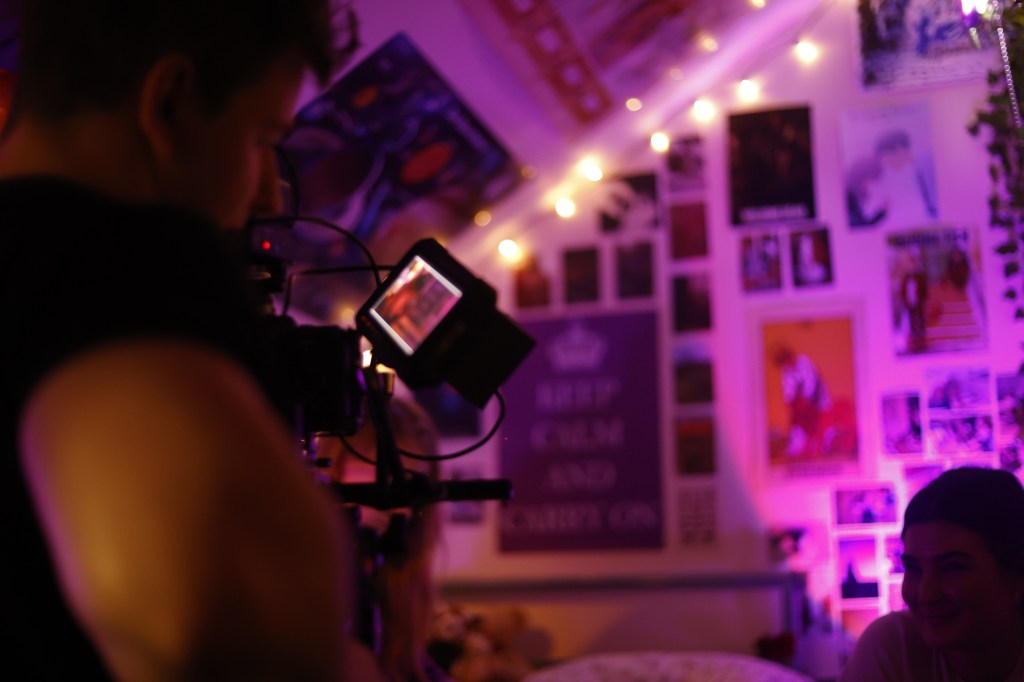
Step one was not fully achievable on my own, so I needed to enact step two.
Step two: find someone who can find money and a crew
The role of a producer is not something to take lightly. In a nutshell, they produce a film. But that means a lot more than one word. They produce money, crew, cast, locations, schedules, and signatures for paperwork. That’s a lot to produce if you are just one person.
So I would recommend getting more than one producer.
In the end, there were probably three of us.
But every one of us had our roles and responsibilities, and I can not thank the other producers enough. M Carter organised the paperwork side of things and enlisted some of the crew. Meanwhile, Maddie Oastler helped to organise the bake sale and helped M. She also stepped in as the assistant director on the day of shooting.
Together, we raised around £200.
Step three: locations and cast
We needed two locations and two actors.
Sounds straightforward, right?
I thought so too.
For the office, I adventured into the city to try to find places willing to have us film there. We found gold with one location, but they could not let us film on a weekend.
Eventually, I asked the university if we could film on the premises. They said yes, but we still needed a student’s room for “Kate’s” scenes.
I took to social media and asked for anyone willing to allow us to film in their accommodation. A student got back to me and gave us permission to film in her room.
M Carter organised the schedule, which meant we had a time and place to film.
Admittedly, we waited a little late before finding a cast. That wasn’t anyone’s fault. We used the platform mandy.com to find applicants but ran into an issue with the account and so had no cast a week before shooting.
I managed to persuade a friend and colleague to take on the role as Time Line Operator.
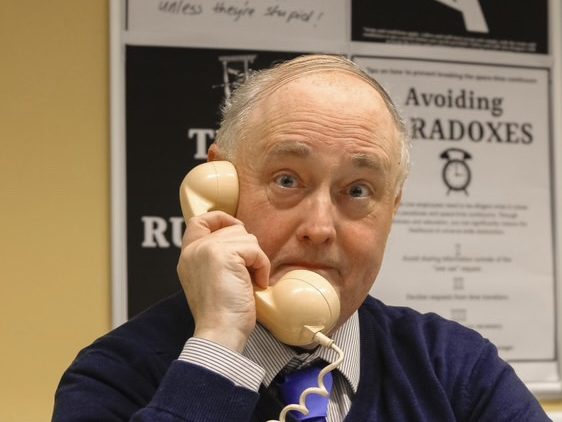
…and I was about to make my debut as an actress.
Step four: go with your gut
Confession time: unless you class primary school plays such as A Midsummer Night’s Dream and my Munchkin performance from the Wizard of Oz as “acting”, I had never acted before.
For a while after considering myself as “Kate”, I sat in a state of disbelief. I alternated between knowing I was capable of portraying her and doubting that fact.
There were a few last-minute alternatives, but nothing gave me peace. It was partly the last-minuteness of it, and partly the fact that I knew I could do it. I had to listen to my gut.
As an autistic woman, I have learned to mask efficiently. Nobody can really generalise something like autism, but I think a lot of autistic people in social environments and workplaces have to adapt to become acutely aware of their face, body language and tone.
In essence, I had not acted before. However, I know what it means to measure body language. This would feel a bit like that, but taken to an extreme.
Step five: doubt your gut (optional)
I think most people taking on large projects at some point ask themselves: “What on Earth am I doing?”
Several answers can flood in all at once:
“Doing something great.”
“Doing something crazy.”
“Making a fool of yourself.”
There was a brief time when I was surrounded by people who would show no hesitation in telling me that. “Stupid, irrational, silly and weird” are childish words, but they can linger in one’s mind if you let them.
Thankfully, I have good people surrounding me who are really encouraging. This is an important element of taking on a big project: a great support system.
You can only go so far as one person.
Step six: fear and embarrassment are hurdles you have to jump.
I have never been drunk a day in my life.
I have only observed drunkenness from a distance thinking: “Thank goodness I never need to know what that feels like!”
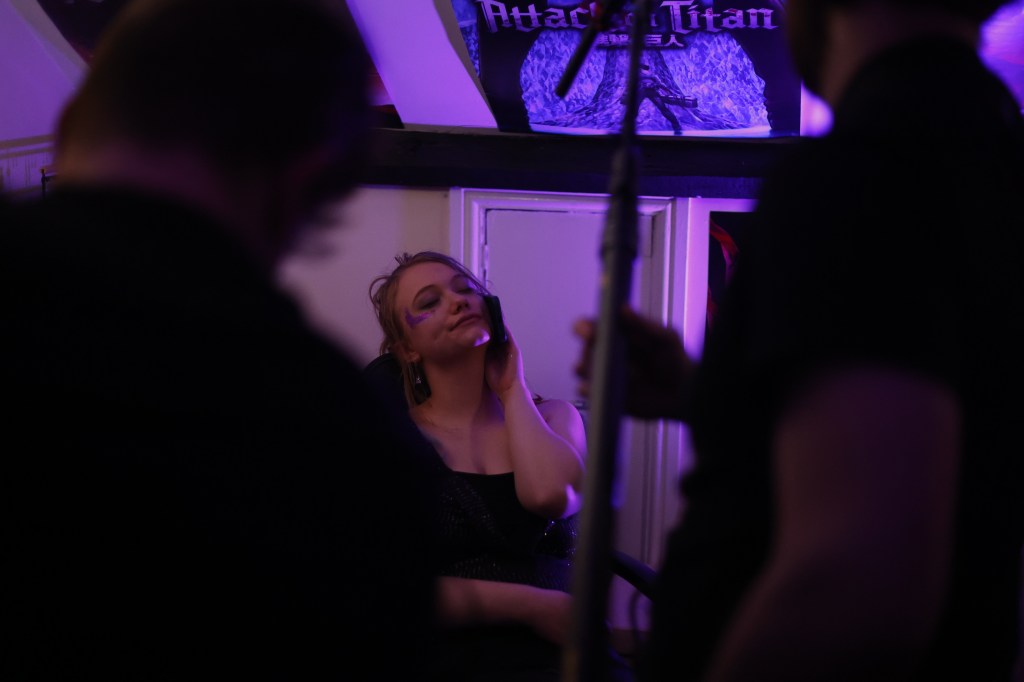
But Kate, my character, does. She gets really tipsy after a night out. I wrote it as such and now I had to act it.
If I let myself think about all the ways I could embarrass myself, I would never have done it. If I let myself feel any fear, then it would have shown. I was the director as well as lead actress. Being a leader, any fear from my end might have impacted the crew as well.
So, I had to jump it. Give up my right to feel afraid. Let myself feel only a little, so I can ride the wave of anxiety as opposed to being drowned by it. After all, fear mixed with excitement is a great alternative to caffeine.
With embarrassment, I have found that it is something to be embraced. It’s bound to be a part of life. If I avoided embarrassment while acting, I figured I would only embarrass myself more.
So I dove straight into it. Slurred speech, messy hair, fake vomit and all.
True, I made some mistakes at first. As the writer of the script, I had no excuse to forget my lines!
However, I managed to strike a balance between my pre-prepared director’s notes, experimenting on the spot and self-critiquing. In the end, it actually ended up being quite fun!
In fact, I would happily act again.
Step seven: celebrate the victories
This step is an important one. Anyone taking on a big project is likely a busy person overall, so taking the time to breathe is just as important as finding the time to be productive.
After filming Time Line, everyone had a Christmas off before reconvening back for the post-production stage. That included myself, which was perfect, as it gave me the time to get prepared to study abroad.
Now I am writing from Brisbane, Australia. Being involved in post-production from halfway around the planet is a funny thing. Thankfully, I managed to sit with the editor, Finlay Dodd, before leaving. However, there is still plenty to do before Time Line can make its film festival debut.
Stay tuned to find out how it goes.
 Kara Joubert: Writer, Journalist & Filmmaker